


Time to replenish my energy

The Tea Loved by a Monastic
H
>Time to replenish my energy
>The Tea Loved by a Monastic

Human Virtues Embodied in Tea
"May I See Myself" Templestay at Daewonsa Temple in Boseong
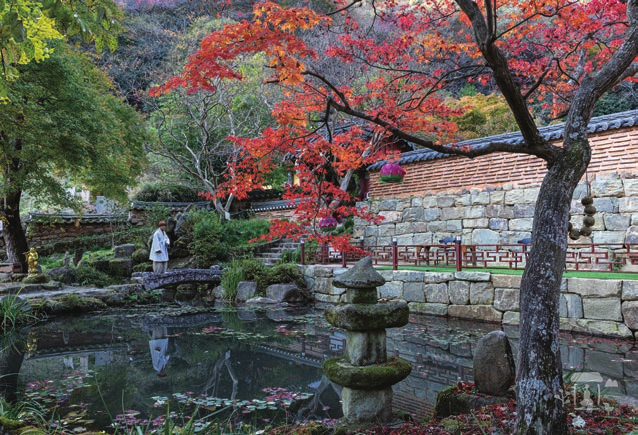
The "Cherry Blossom Road" to Daewonsa Temple in Boseong is one of the "100
Beautiful Roads of Korea," a list selected by the Ministry of Land, Infrastructure and
Transport. While the nickname automatically conjures up images of spring with fluttering
pink cherry blossoms, the 5.5-kilometer-long road lined with king cherry blossom
trees isn't the only beauty to be found on the path to Daewonsa Temple. Daewonsa
Temple truly is a temple nestled beside a beautiful waterway. Whether heading from
Songgwangsa Temple, its head temple, toward Mundeok, or heading back from Sapyeong-
myeon in Hwasun-gun County, the waterway runs alongside National Route 15. Lake
Juam, meandering between Mt. Jogyesan and Mt. Mohusan, and its tributaries—home to
migratory birds, silver grass, and a dazzling spectacle—evoke in me waves of nostalgia.


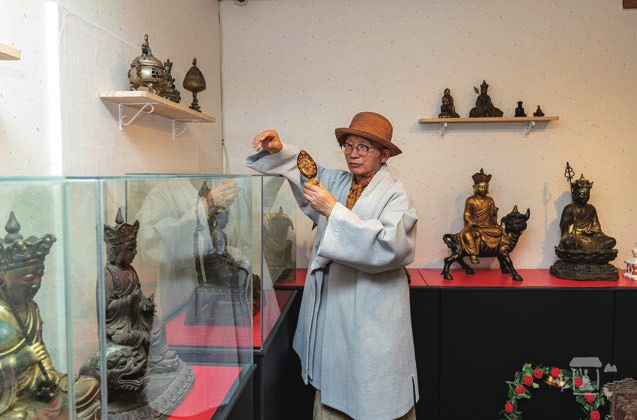
Daewonsa Temple, nestled amidst water and cherry trees, is also the first tea plantation where Boseong Green Tea was cultivated, meaning Daewonsa corresponds to the root of the "Green Tea Capital," another name for Boseong. Boseong Tea culture originated in Korea during the Baekje era, and flourished in tandem with the monastic practice of the Seon School during the mid-Goryeo era. Here, where countless past monks indulged in both Seon and tea, Hyeonjang Seunim continues this tradition. He oversees not only the exchange of Korean-Japanese tea culture, but also guides ordinary people in experiencing Daewonsa's tea culture through the temple's Templestay programs.
Actively engaged in social media, he calls himself "Hyeonjang Beopsa." A monk who masters the Sutra, Vinaya, and Abhidharma Baskets is called a Tripitaka Master or "Samjang Beopsa" in Korean. True to his name, Hyeonjang Seunim's erudition elicits much admiration.
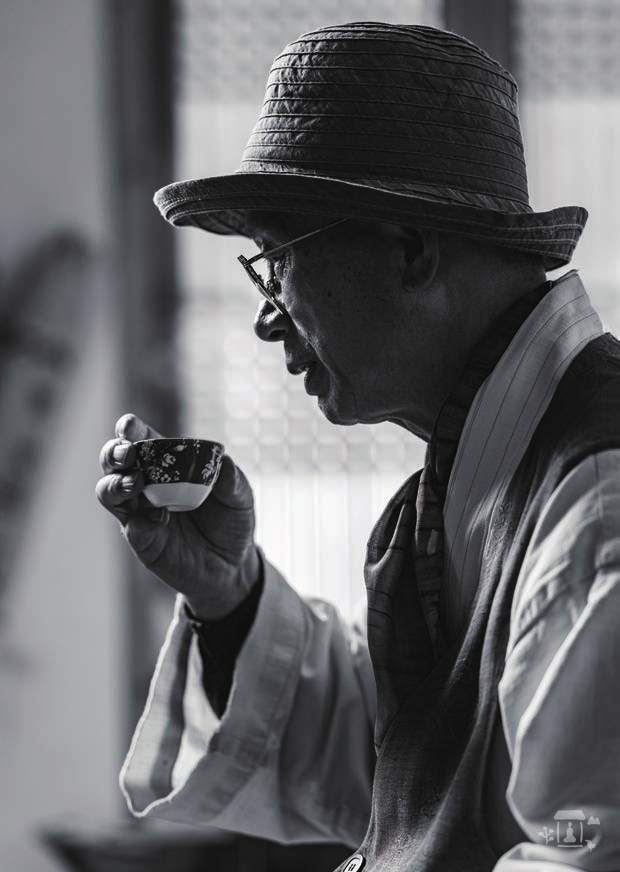
We chatted about tea while drinking green tea—made from Daewonsa Temple's ancient tea tree leaves—at Asiram Hall, a hanok-style house inspired by the Indian word "Ashram," meaning "place of retreat." It does not taste bitter even after being steeped for a long time. Its flavor is rich and deep, just like the stories passed on by Daewonsa Temple and Hyeonjang Seunim.
The Virtues of Tea Based on 50 Years of Learning
When did Hyeonjang Seunim begin to love tea? I was a bit embarrassed to ask this question directly, so I first asked, "When did you first encounter tea, Seunim?" He said he first encountered it after entering the temple. Beopjeong Seunim, a name familiar to most Koreans, was apparently karmically connected to Hyeonjang Seunim, in addition to being his actual uncle. They maintained a close connection, and Beopjeong Seunim also became his Dharma uncle (sasuk) within the Buddhist lineage.
Hyeonjang Seunim explained: "I entered monastic life after graduating from high school thanks to my connection with Beopjeong Seunim. One day, after being served tea by Beopjeong Seunim at Bongeunsa Temple in Seoul, I went down to Songgwangsa Temple to practice as a postulant. In 1975, the year Buriram Hermitage was completed, I received ordination from Gusan Seunim. While serving as his attendant, I learned how to brew tea, and served green tea to guests. Back then, I didn't even know what tea tasted like. This year marks exactly 50 years since I received my ordination."
When asked what kind of tea he preferred, he replied, "I drink various kinds of tea, not just one." Borrowing from the Taiwanese Seon master Sheng Yen, he added, "Conversations shared over tea are more important than focusing on the variety, price, and quality of tea." He believes that when sharing tea, one should cultivate etiquette and the art of conversation.
Hyeonjang Seunim elaborated, "There are things to talk about over tea, but there are also things to avoid. The latter includes: politics, finances, and negative comments about others. We should learn this etiquette of conversation over tea and incorporate it in daily life. During the Silla era, Great Master Wonhyo emphasized the seventh of the Bodhisattva precepts as the most important, a precept that helped unify Silla society. That seventh precept is 'not praising yourself nor criticizing others.' Most of us practice the opposite."
Incorporating Culture, Art, and Practice
There are many reasons Seon practitioners drink tea, but one of the most prominent is that it helps one remain awake and enhances mental clarity. However, modern people, caught up in the hectic pace of life and desperately needing sleep, often shy away from tea, citing the common belief that tea can cause insomnia.
Hyeonjang Seunim said, "Since Korea's liberation from Japanese occupation, our cultural codes have undergone tremendous transformation during the process of modernization. Tea culture is one of our country's most deeply rooted traditional cultures. It serves as a crucial medium for communication between people. In China, discussing Eastern and Western philosophies over a cup of tea was considered a cherished virtue. Sharing and gifting tea, and expressing gratitude through letters, often gave birth to great poems that will be remembered for generations to come."
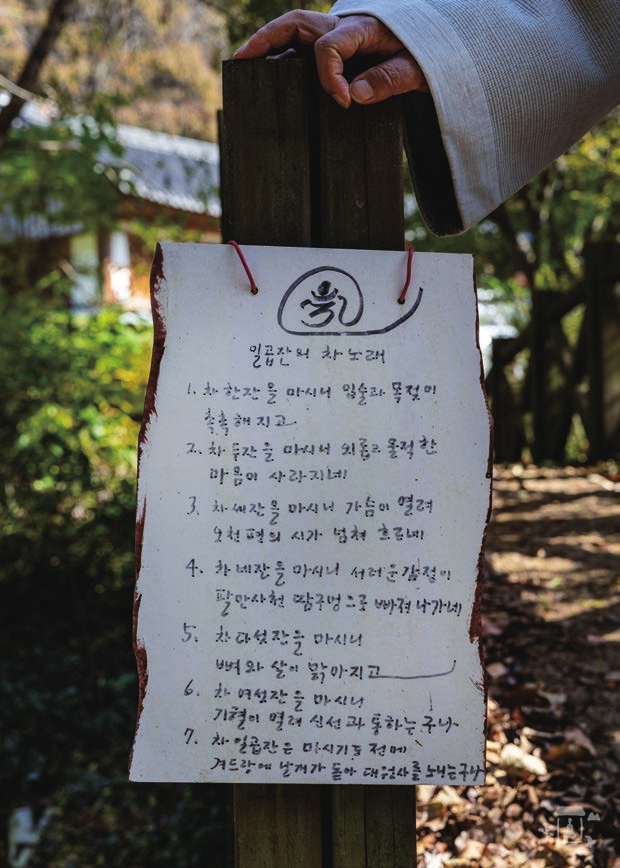
The first cup moistens my lips and throat,
The second cup erases my lonely, depressed heart.
The third cup opens my heart, unleashing 5,000 poems,
The fourth cup releases sad feelings through my 84,000 pores.
The fifth cup purifies my flesh and bones,
The sixth cup strengthens my energy and circulation and I
commune with the immortals.
Before I even drink the seventh cup, wings grow under my
arms
And I stroll Mt. Cheonbongsan.
Where is paradise or Land of Bliss?
Riding the clear breeze of Daewonsa Temple
I want to fly there,
with my temple friends.
Wow!
The most important figure in the history of Daewonsa tea is State Preceptor Jajin Wono. He served as the abbot of Seonwonsa Temple on Ganghwa Island when the printing woodblocks of Tripitaka Koreana were inscribed there. After the Tripitaka Koreana was completed, he came down to Daewonsa Temple. Daewonsa Temple possesses a woodblock print titled Seonmun Yeomsongjip (Compilation of Examinations of and Verses on Ancient Precedents ), composed by State Preceptor Jingak. It has been designated a general treasure, and its existence suggests that State Preceptor Jajin Wono practiced both tea culture and Seon while cultivating his tea fields. Hyeonjang Seunim said, "Where Seon culture flourishes, tea culture also flourishes. There's a Chinese legend about Bodhidharma. While meditating in a cave, Master Bodhidharma, to ward off drowsiness, cut off his eyelids with a knife and threw them out of the cave. The grass that grew from his eyelids was tea. Drinking tea sharpens the mind, clears the consciousness, and enhances energy circulation. Therefore, tea is a good companion for Buddhist practitioners. Not only Seon monks, but also scholars and students who enjoy tea, find it beneficial for overcoming laziness."
Awakening to Oneself with the Help of a 350-Year-Old Tea Tree
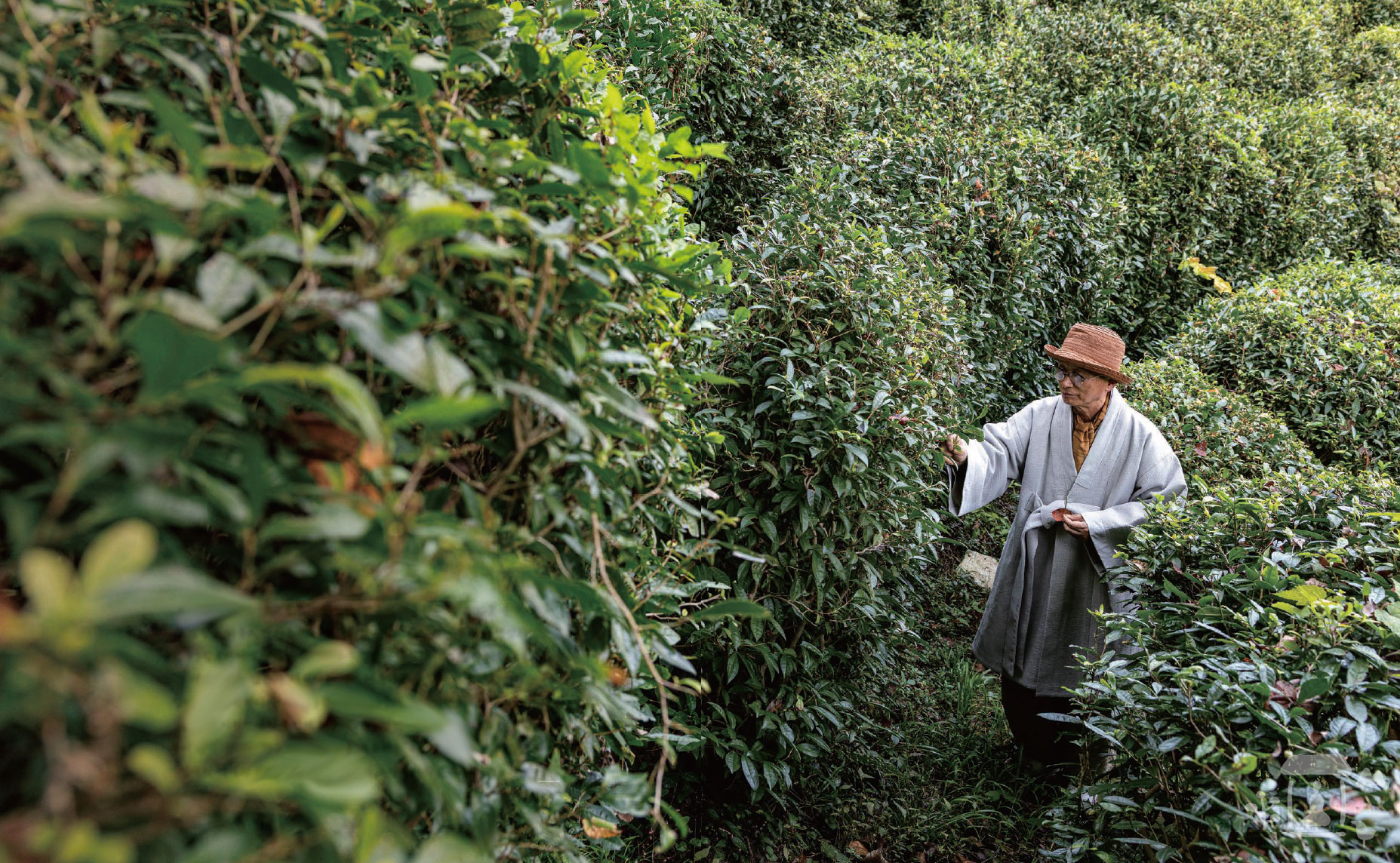
Supporting this assertion, Daewonsa Temple is home to the "Boseong Daewonsa Old Tea Tree Colony," designated by the Ministry of Agriculture, Food and Rural Affairs as National Important Agricultural Heritage No. 11. "Old tea trees" (gochasu ) generally refer to wild tea trees over 100 years old. The wild gochasu trees at Daewonsa Temple are a staggering 350 years old and some reach up to 3.4 meters tall. Since tea trees belong to the camellia family, at first glance, one might mistake them for old camellia trees, until one notices the small, dainty green tea flowers.
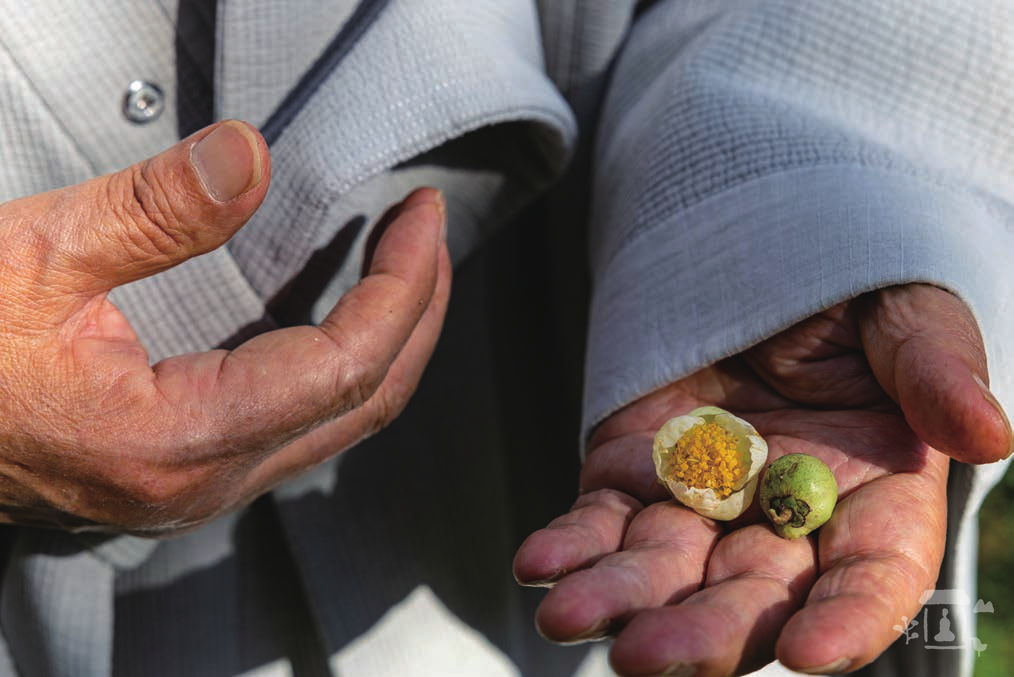
Hyeonjang Seunim said, "Have you seen the tea flowers blooming in the gochasu colony? The very form of the tea flower embodies the very spirit of tea. The flower appears to bow its head, hidden by the leaves. To reveal the rough leaves is to reveal one's flaws, and to conceal the flowers is to conceal one's greatest pride. The tea tree possesses this very virtue."
The "Gochasu Tea-Making Templestay Program" embodies the virtues of tea and is scheduled to begin full operation next spring. An electric roasting pot has been installed in the Kimjijang Museum in the temple compound, allowing visitors to experience making tea. The fragrant aroma of tea will fill the air during tea season. Furthermore, the "Death Experience Templestay," which encourages reflection on life, and the "Single Beongle Templestay," which fosters connections with fellow dharma brothers and sisters, are also in the works. A wide range of customized programs are also available, including yoga meditation, singing bowl meditation, and Tibetan dream yoga.
Hyeonjang Seunim says, "A Templestay is a type of monastic experience. Gusan Seunim said that even if you live in the secular world and don't shave your head, you should experience monasticism at least once, for either 3 days, 7 days, 15 days, or 1 month. People need to learn through travel. A Templestay is where you can experience new things with minimal effort while still residing in the secular world."
They say if you want to know yourself, read 1,000 books and travel 10,000 kilometers. I sincerely hope that Hyeonjang Seunim will be our guide for a long time on this journey that will awaken us to a completely new self, one completely different.



4th Fl. Templestay Information Center 56 Ujeongguk-ro, Jongno-gu, Seoul, South Korea (03145)
Tel : 82-2-2031-2000 / Fax : 82-2-732-9928
Copyright ⓒ 2020 Templestay webzine. All Rights Reserved.
4th Fl. Templestay Information Center 56 Ujeongguk-ro, Jongno-gu, Seoul, South Korea (03145)
Tel : 82-2-2031-2000 / Fax : 82-2-732-9928
Copyright ⓒ 2020 Templestay webzine. All Rights Reserved.