


Time to find myself

Temple Road, The Journey to Hermitages
H
>Time to find myself
>Temple Road, The Journey to Hermitages

In a Lotus Flower that Bloomed in Winter
Okcheonsa Temple in Goseong—Cheongnyeonam, Baengnyeonam, and Yeondaeam Hermitages
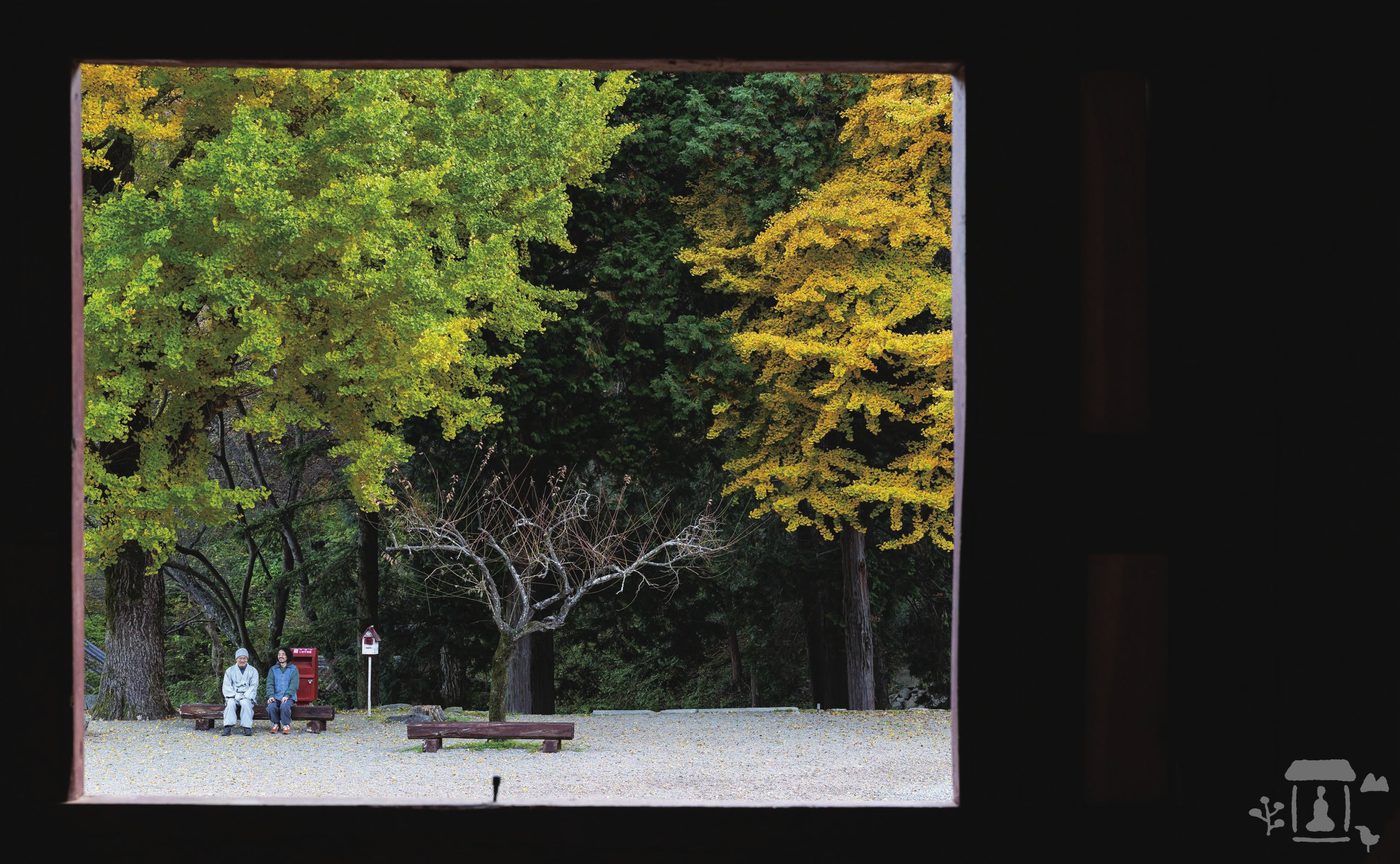
One day, not long after Ipdong—the day that traditionally
marks the beginning of winter in Korea—I set out for
Okcheonsa Temple in Goseong. It was the day of the
College Scholastic Ability Test (CSAT), but it was not that
cold, and the sky was crystal clear and blue. The fall
foliage was at its peak, making it perfect weather to soothe
my weary mind. It was a lucky day for me, a true rarity.

A Temple Surrounded by Peaks Resembling Half-Opened Lotus Flowers
First, I took the subway to Seoul Station to go to Jinju Station. I sat down when a seat became available, and I noticed the person next to me opening a palm-sized book and began reading. I glanced at it and noticed it was the Thousand Hands Sutra (Cheonsu-gyeong). The title refers to the boundless compassion and eyes of wisdom represented by "1,000 hands and 1,000 eyes." In my hand, I held Han Byung-cheol's Philosophy of Seon Buddhism . Haikus are repeatedly quoted in the book, and my eyes linger on the line, "Haiku is free from prayer or longing because it lacks desire." What desires did I have as I embarked on this journey? As I contemplated, a vague thought gradually became clearer: I must gain something from this long journey. I tried to erase that thought. No, I decided to leave it alone until it faded away on its own.
I got off at Jinju Station and took a car to Okcheonsa Temple. It was only about 3 or 4 p.m., but as I walked the already dimly lit forest path, I came upon a small bridge. I glanced up absentmindedly, and the words Geungnakgyo (Paradise Bridge) caught my eye. It might be an exaggeration to say that paradise is just beyond this bridge, but even so, the sight of Geungnakgyo in my scattered mental state elicited an immediate "Ah!"
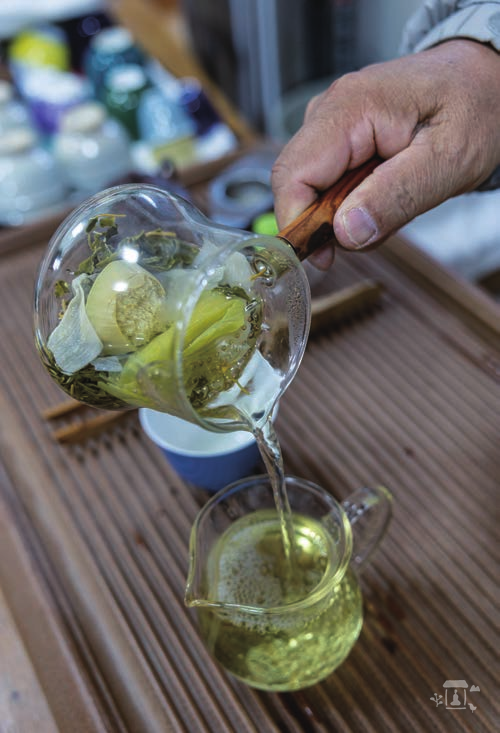
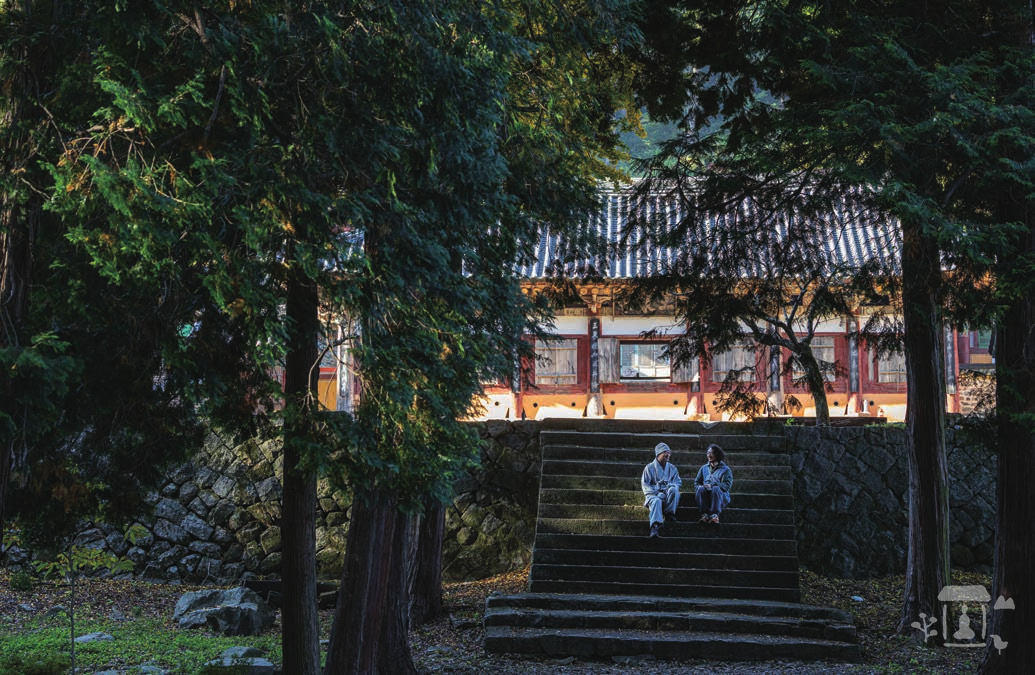
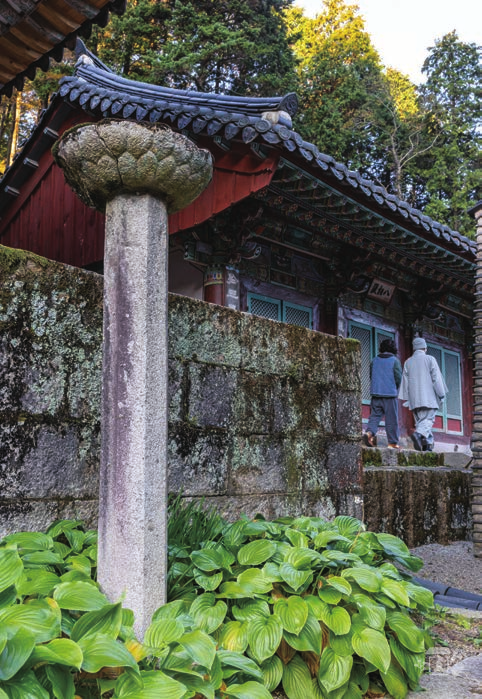
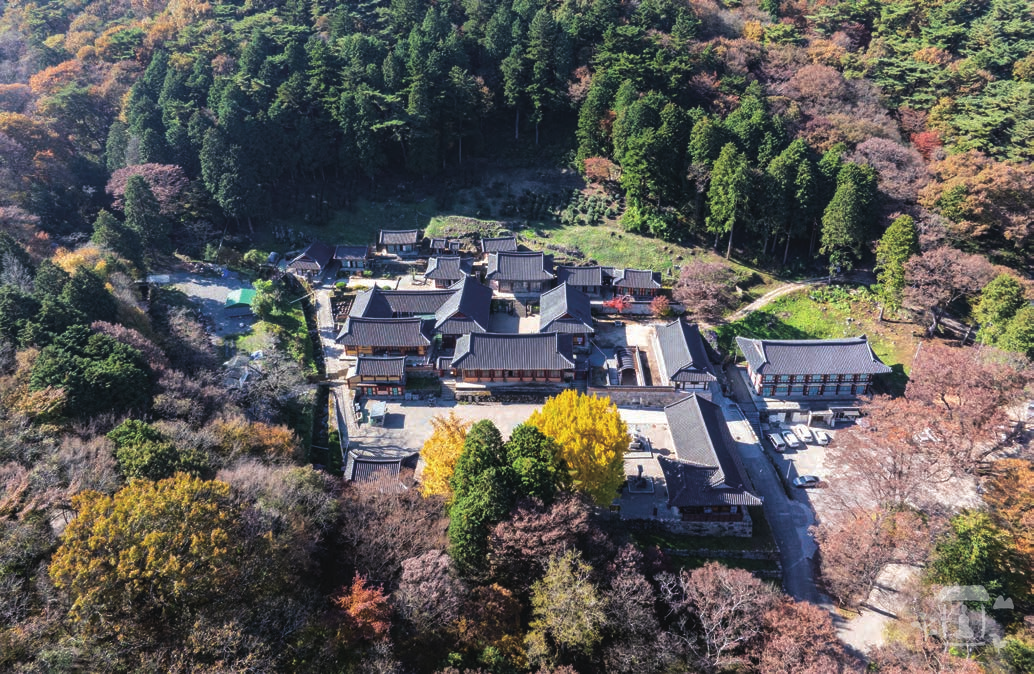
Okcheonsa Temple is indeed surrounded by peaks resembling "half-opened lotus blossoms." The abbot, Jinseong Seunim, was already outside, waiting for us. I offered a bow, put my palms together, and headed to the dormitory (yosachae). Over a cup of lotus tea brewed by the abbot himself, our conversation naturally led to the subjects of Mt. Yeonhwasan and Okcheonsa Temple and their connection.
"No matter which temple you visit, there's a connection between the mountain's name and the temple located on it. Originally, Okcheonsa Temple was one of the ten major Hwaeom (Avatamsaka) temples, so it included the character "hwa (華)," but 1,300 years have passed since the passing of its founder, Uisang Seunim. The lotus flower is, of course, a symbol of Buddhism, but for it to bloom, water is needed. A dozen years ago, during a drought in western Gyeongnam, the valleys of Ssanggyesa Temple dried up and all the reservoirs, large and small, in Goseong became empty; however, the water continued to flow at Okcheonsa."
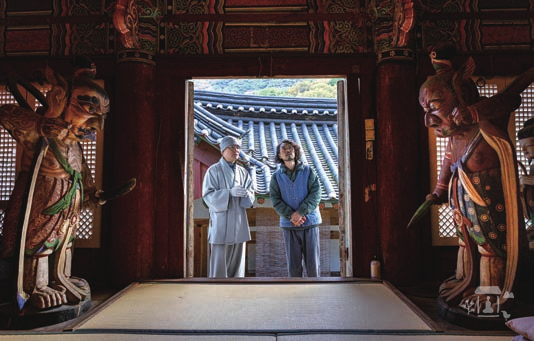
While Jinseong Seunim spoke of lotus flowers and water, my hand kept reaching for the lotus tea. Come to think of it, the lotus flower and the water he spoke of were all contained in a single cup of tea! The essence of the lotus tea entered both my ears and my mouth. Though the entry points were different, it seemed the lotus flower and the water both reached the same destination.
Jinseong Seunim said, "They say there were four springs here when I entered the temple as a child, but now there are only three. Janggun Spring no longer flows, but people say those who drank its water caused too many 'problems' because they became too healthy. I don't know what kinds of problems they were."
Laughter erupted. In any case, Janggun Spring was filled in for various reasons, but since there were so many other sources of water, it was okay to plug one. This implies that Okcheonsa Temple will never run out of water. As I sipped tea while listening to the abbot, the name "Okcheonsa Temple" (lit. "Jade Spring Temple") took on greater significance and a sense of familiarity.
The water for the tea we were drinking came, of course, from Okcheonsa Temple's spring. He said, "No matter where you go to drink tea, it can't compare to the water here," and his words revealed a deep sense of pride.
Lotus flowers bloom here and there on the surface of the water. The names of the hermitages—Cheongnyeonam, Baengnyeonam, and Yeondaeam—all contain the character "yeon (蓮)" (lotus). Once there were twelve hermitages, but now only these three remain.
The Life of a Bodhisattva, and How to Practice Bodhisattva Deeds
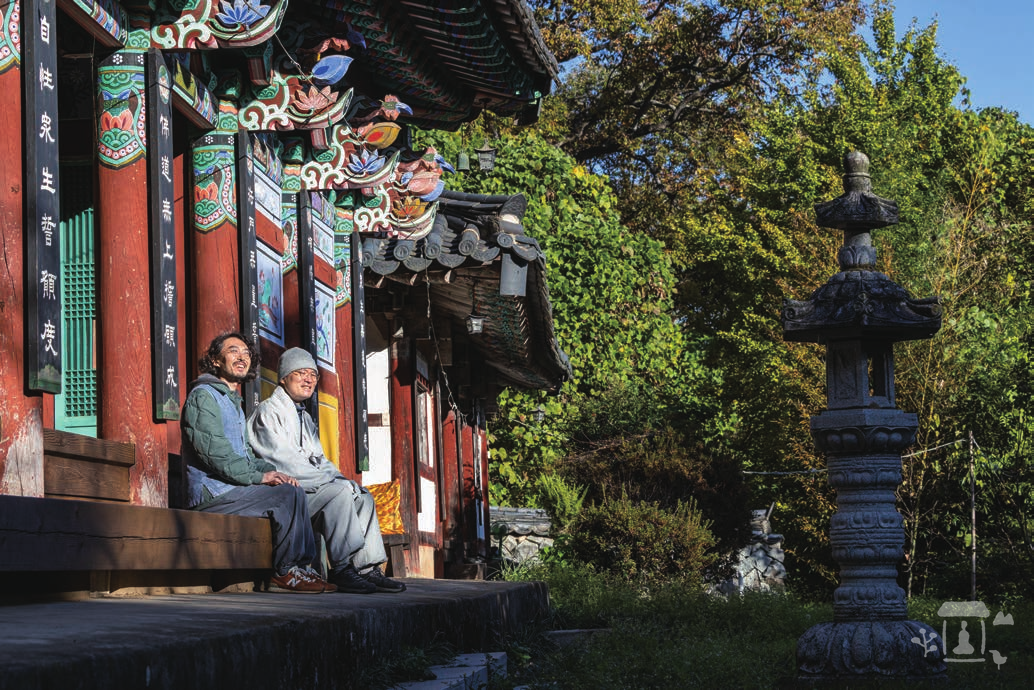
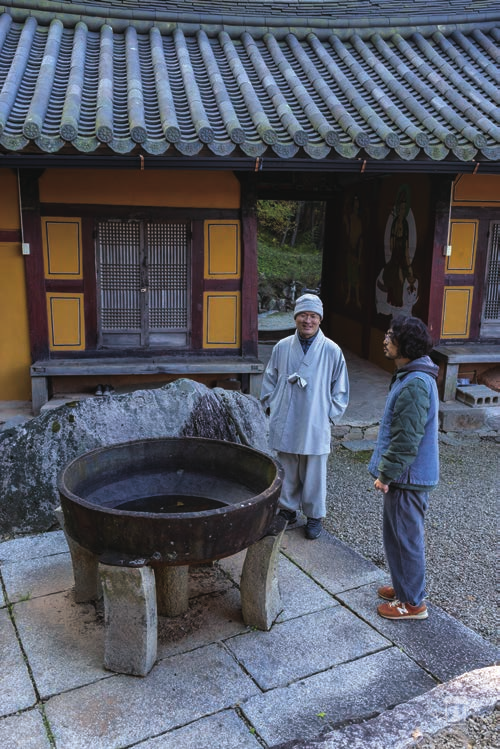
After the dinner offering, we ascended directly to Cheongnyeonam Hermitage, guided by Wonmyeong Seunim, the hermitage's superintendent. Upon entering, the first thing we saw was an iron cauldron placed in one corner of the courtyard. I wondered about its great size and what it was for, and I was told it was previously used to make paper to be offered to the king.
Wonmyeong Seunim informed me: "In the past, temple monks possessed the skill to make paper. They carved woodblocks, printed texts on hanji (traditional Korean paper), and produced scriptures for study. Okcheonsa Temple was known for producing the highest quality hanji, but the government imposed excessive quotas on them. The monks also suffered exploitation by local Confucian scholars who needed paper to compile genealogical records. For a hundred years, the monks endured many hardships."
The cauldron, a witness to that arduous history, now rested idly, the stagnant water inside reflecting a young ginkgo tree beside it, barely 200 years old. I glanced at my face on the water's surface. It reflected well, but left no trace.
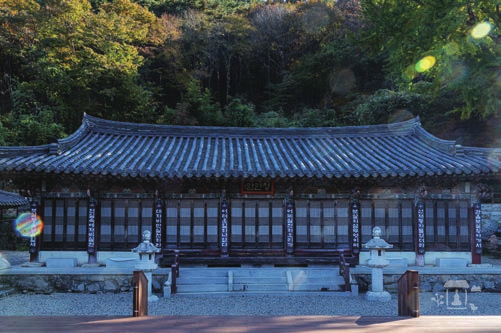
The couplet written on the pillar of the hermitage's dharma hall is written in Korean script. When it needed to be replaced, it was done with Korean script that even modern people can read.
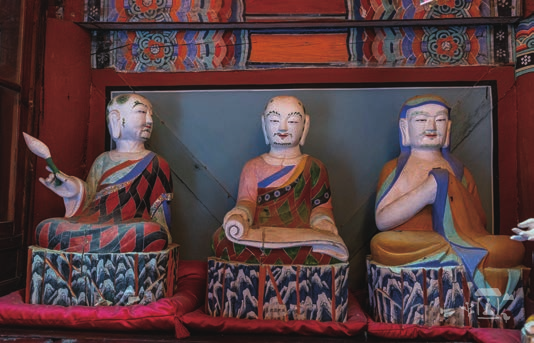
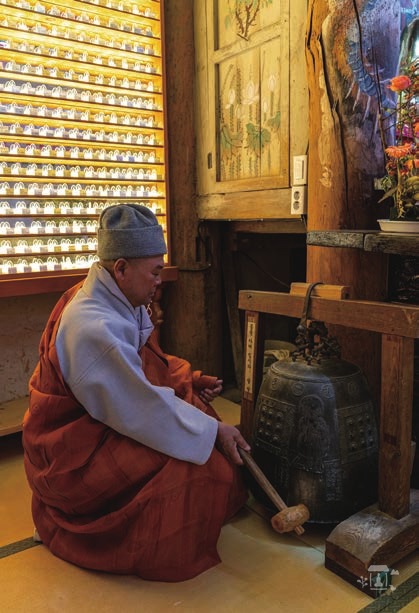
The next day began with a dawn ceremony. Actually, I didn't visit the Daeungjeon Hall the day before, but the thought of the dawn ceremony being my first there made me nervous and unable to sleep well. Instead of the Shakyamuni Buddha, the hermitage's Daeungjeon Hall enshrines the Amitabha Triad, and beneath each figure in the triad is the same inscription: "May all sentient beings attain perfect enlightenment." With the abbot personally officiating the dawn ceremony, I felt my mind opening like a pure lotus flower, toward "perfect enlightenment." As I stepped outside the hall, my eyes adjusted to the darkness, and the stars began to appear one by one in the pitch-black sky. In fact, those stars have always been there.
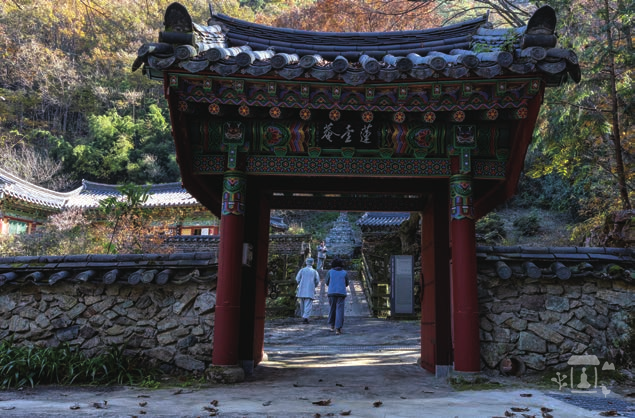
After the breakfast offering, we toured the temple compound again guided by Wonmyeong Seunim. The dharma halls Myeongbujeon, Chilseonggak, Josajeon, Dokseonggak, Sallyeonggak, and Nahanjeon are so magnificent that I regretted leaving them behind after seeing them only for a moment.
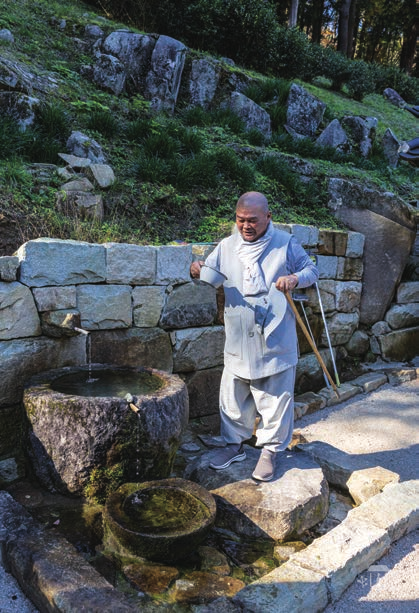
Sallyeonggak Hall, in particular, is so small that I can't even enter to offer a prayer, but somehow, I have a feeling it will be beloved by young Buddhists. Would it sound too secular of me if I couldn't resist the cozy, yet small, space? I also visited the famous Oksaem Spring. It's said that the phrase "Oksaem Spring that Burns Afflictions" used to be inscribed on Oksaem Pavilion, but now a blue dragon is painted in its place. I scooped up some water with a blue ladle and drank. Drinking with the mindset that one is burning away their afflictions is even more refreshing.

A Heart that Makes Flowers Bloom to Make Others Happy
On the way to Baengnyeonam Hermitage, once one of the most famous Seon hermitages in western Gyeongnam, Wonmyeong Seunim paused in thought and said: "We use the expression 'manhaeng' (萬行) to mean 'all 10,000 actions in daily life are practice.' I think this is the path great monks walked, either leisurely or while investigating a hwadu."
Unlike Cheongnyeonam Hermitage, which has grown larger, Baengnyeonam Hermitage retains its original appearance. I briefly sat with Wonmyeong Seunim in front of the hermitage, and we chatted in the sunlight. There's a ginkgo tree here, too. Seeing another ginkgo tree like the one I saw at Cheongnyeonam Hermitage was somehow moving.
Our last stop was Yeondaeam Hermitage, just a little farther away. According to Abbot Jinseong Seunim, it's a hermitage that represents the "dae" (stem) of the lotus flower. Yeonji Pond, now called Yeonhwari, is the root in this massive lotus metaphor.
But since there's no source of water there anymore, Yeondaeam Hermitage became the final destination of our trip. Yeondaeam, too, retains its original charm, and despite its remote location, it is well-kept and exudes a warm vibe. This warmth reminded me of the feeling I had when I first visited Okcheonsa Temple and drank lotus tea. During my two-day, one-night stay at Okcheonsa Temple, I felt as though I had been embraced, like green tea leaves nestled within a lotus bud (to make fragrant lotus tea).
After leaving Yeondaeam Hermitage, I parted ways with Wonmyeong Seunim on the road. We said our goodbyes before getting into our own cars, and now that we were going our separate ways, it felt like a final goodbye. I was sad, but perhaps because we didn't stop our cars for a final goodbye, it felt like a true separation.
On my way back to Seoul Station, I unrolled the tea cloth (dapo) Wonmyeong Seunim had given me and saw neatly written upon it Cheongdam Seunim's Song of the Heart . The final lines read: "Rather than rejoicing at the sight of flowers/ To make flowers bloom/ To make others happy/ This is the heart of compassion." I was moved.
Before I set off on my journey, I had agonized over what to do with "my desire." However, the last words of Song of the Heart make no reference to "me," only "others." In the face of the desire to make others happy, I either disappear completely, or, conversely, become so vast that I become indistinguishable from the world itself. There's no room for "my desires." That small yet not inconsequential realization is the lotus flower blooming within me today.



4th Fl. Templestay Information Center 56 Ujeongguk-ro, Jongno-gu, Seoul, South Korea (03145)
Tel : 82-2-2031-2000 / Fax : 82-2-732-9928
Copyright ⓒ 2020 Templestay webzine. All Rights Reserved.
4th Fl. Templestay Information Center 56 Ujeongguk-ro, Jongno-gu, Seoul, South Korea (03145)
Tel : 82-2-2031-2000 / Fax : 82-2-732-9928
Copyright ⓒ 2020 Templestay webzine. All Rights Reserved.