


Time to understand our traditions

Buddhist Culture Reflected in Sacred Treasures
H
>Time to understand our traditions
>Buddhist Culture Reflected in Sacred Treasures

Large Stones Silently Guarding the Building from Underneath
Stone Retaining Walls and Stairs
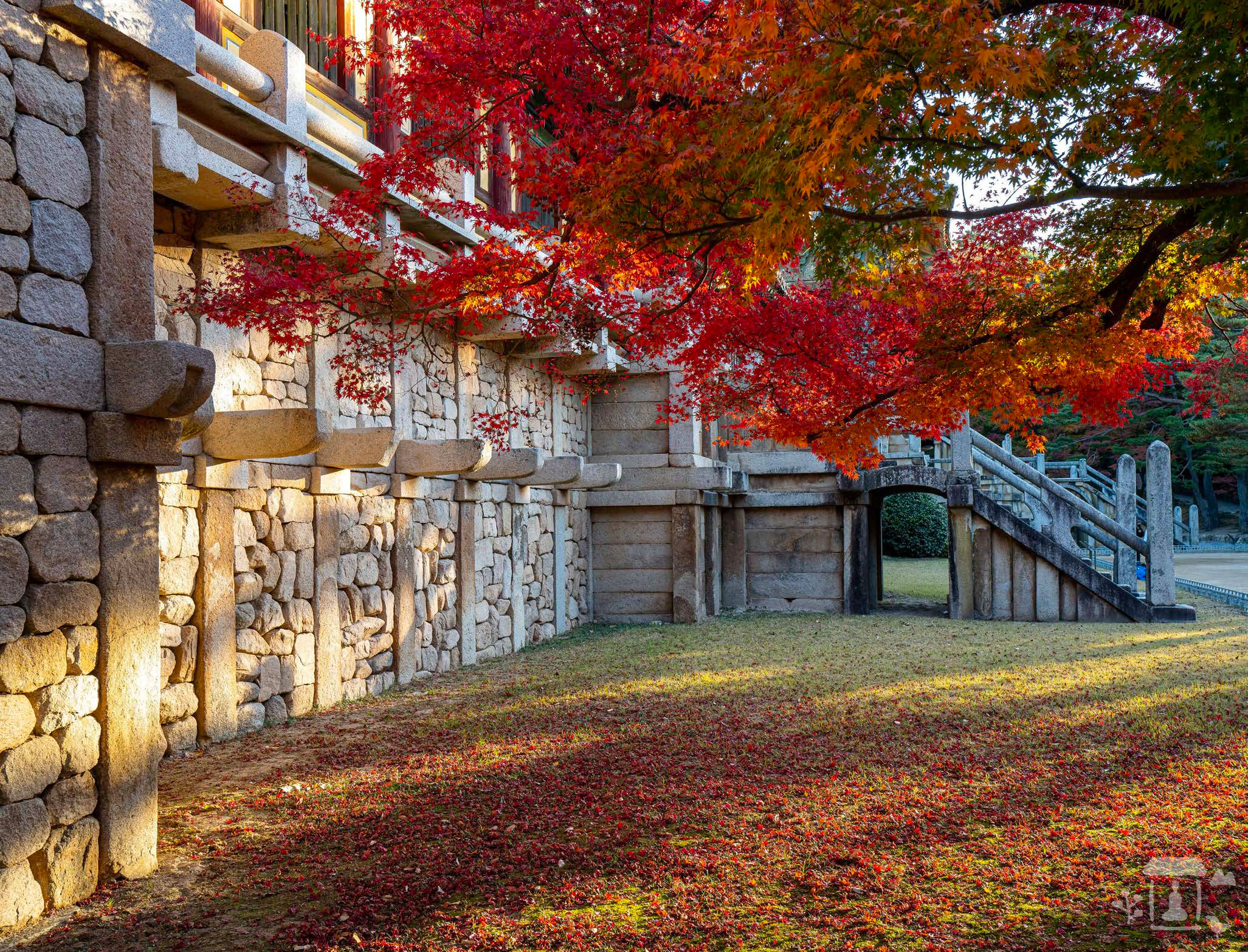
The Korean Peninsula is rich in mountains and rocks, with solid granite being ubiquitous. Our ancestors used this granite to build dolmens to mark a burial site. Approximately 40,000 dolmens, dating back to the Bronze Age, remain on the Korean Peninsula alone. Their unique, independent forms are concentrated in specific regions, which led to the designation of the dolmen clusters in Hwasun, Gochang, and Ganghwa Island as a UNESCO World Heritage Site. The stone-cutting techniques used to make them were later skillfully applied to crafting Buddhist structures, including stone pagodas, Buddha statues, stone lanterns, and flagpole supports. Using firm, solid granite, artists prayed for eternity with these masterworks.
The Stone Retaining Walls of Buseoksa Temple: The Ultimate in Magnificent Natural Stone Structures
Because the Korean Peninsula is mountainous, constructing a building on a hillside first requires leveling the sloping ground by building a stone retaining wall (seokchuk). A stone retaining wall, as the name suggests, is a stone wall that retains the soil behind it. Our ancestors honed their techniques to create stone retaining walls that blend seamlessly with the natural surroundings while also being pleasing to the eye.
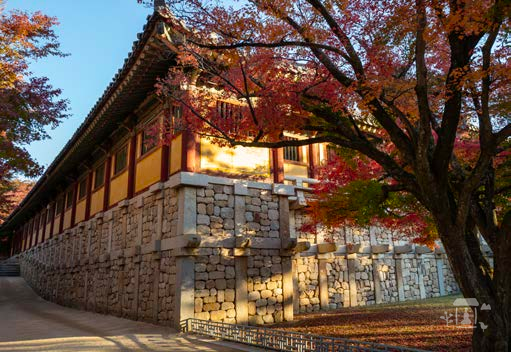
A prime example of this is the great stone platform called "daeseokdan" at Buseoksa Temple in Yeongju. At first glance, it appears to be a simple pile of large natural stones, but a closer look reveals meticulous craftsmanship.
The daeseokdan of Buseoksa Temple is composed of large, interlocking stones, with the gaps between them meticulously filled with smaller stones. The capstones, which cover the top level of the retaining wall, are flat on top and aligned with the stonework below.
A notable feature is the smooth, even sides of the stone retaining wall, free of any protruding stones. The masons must have painstakingly aligned the stone walls to ensure perfect alignment. Buseoksa Temple's daeseokdan epitomize the ultimate majesty of natural stone.
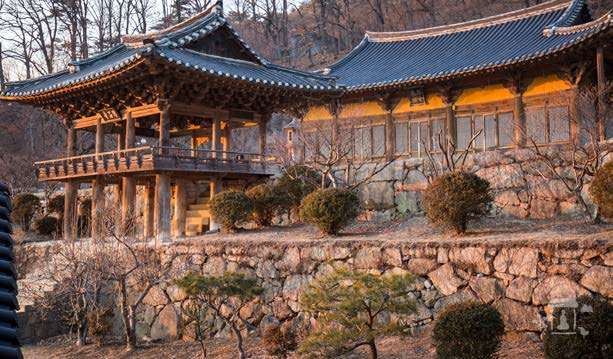
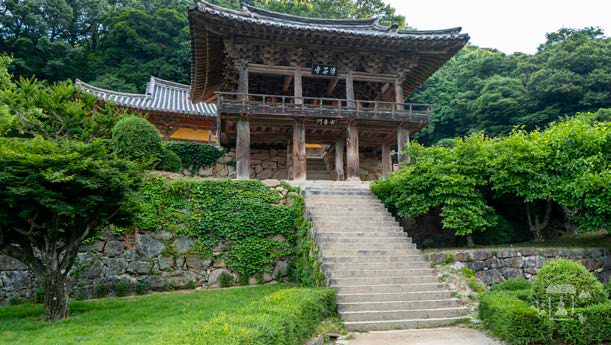
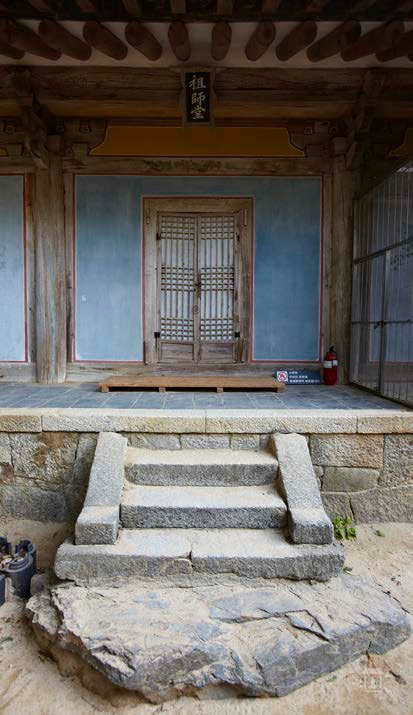
Bulguksa Temple's Stone Retaining Walls, Maximizing Aesthetics
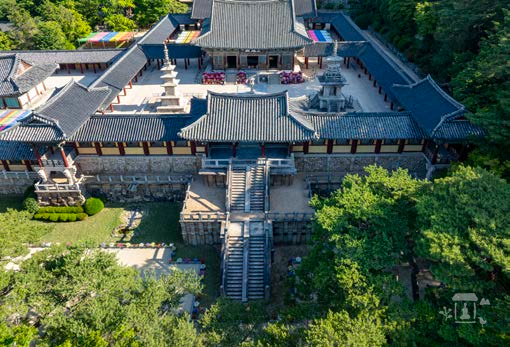
Meanwhile, Bulguksa Temple's daeseokdan can be described as "stone retaining walls that maximize aesthetics, harmoniously blending natural stone with polished long rectangular stones called 'jangdaeseok.'" Bulguksa Temple, built during the height of Silla culture, took a remarkable 23 years to complete. The temple's exceptional quality reflects the time it took to complete it.
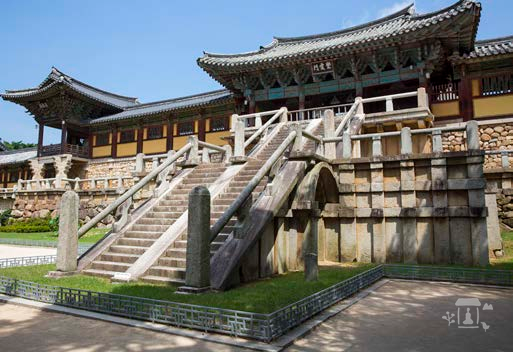
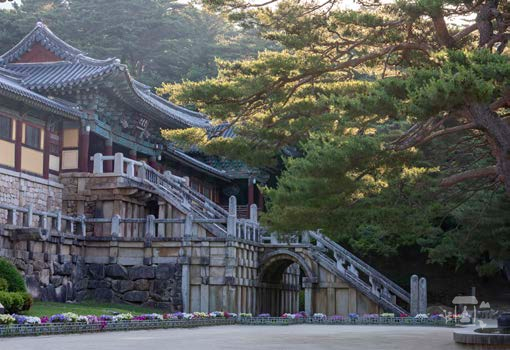
Bulguksa Temple leveled the southern slope of the mountain foothill, and layered stone retaining walls (designated a general treasure) in a post-and-lintel style. The upper part of the stone retaining wall symbolizes the buddha realm, while the lower part represents the secular realm. Two elaborately and beautifully carved stone bridges—named Cheongungyo and Baegungyo—connect these two realms, earning them designation as national treasures.
The post-and-lintel stone retaining wall is truly awe-inspiring. The vertical posts are carved from stone, and the horizontal stone beams connecting them create a harmonious structure. The spaces between the vertical posts and horizontal beams are filled with natural stone, creating a harmonious blend of natural materials and man-made craftsmanship.
The craftsmanship is particularly outstanding where the natural stones and hand-polished stones meet. To place the horizontal stone beams on top of the natural stone wall, the lower portions of the beams were carved to match the natural stones' curvature. This technique, known as the "Graengi method," was applied to the stone retaining wall, a technique of carving the bottom of wooden pillars to match the curvature of the foundation stones. The stone retaining wall and staircase, which were built over 1,200 years ago, have been designated as a general treasure and a national treasure, respectively, demonstrating their exceptional value and beauty.
The Stylobate, Elevating a Building's Dignity
When looking at dharma halls and other major buildings, you can see how they were built slightly above ground level, sitting on a stone foundation. This stone foundation is called a stylobate.
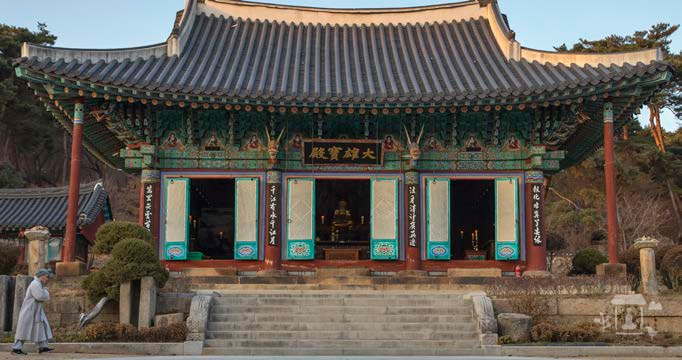
During the Mongol invasions of Goryeo (1231―1273), Bulguksa Temple suffered devastating fires, and during the Imjin War (Japanese invasions of Joseon; 1592–1598), most of its wooden structures were destroyed, leaving only the stone structures. Because the temple was rebuilt and rebuilt each time, the original appearance of the buildings is unknown. Only the stonework retains its original form. In essence, the stone retaining walls—quietly preserving the structures' original forms—are a precious relic. Therefore, examining the stylobates found at numerous temple sites allows us to infer the period in which a structure was built. The stylobate of Daeungjeon Hall at Bulguksa Temple is a prime example of stone retaining walls in the post-and- lintel style.
The stylobate of Bulguksa's Daeungjeon Hall features long, cut stones sandwiched between the foundation stones. This is a characteristic of Silla-era architecture, designed to prevent the lower timbers of the building from contacting the ground and decaying. The presence of this feature at a temple site indicates it was built in the Silla period. Similar features can also be found at Jeokgwangjeon Hall of Bogyeongsa Temple in Pohang and Birojeon Hall of Gagyeonsa Temple in Goesan.
The stylobate in the stone retaining wall at Bulguksa's Daeungjeon Hall consists of stone pillars, and sandwiched between them are flat, wide face stones (stones that serve as a wall surface), just like the stylobate of Seokgatap Pagoda across the courtyard. To prevent rainwater from eroding the face stones, a foundation stone is placed horizontally on the ground under the face stone to support the entire structure, and a capstone (the upper stone that covers the surface of the face stone) completes the stylobate. The foundation stone and capstone protrude farther out than the face stones. The corners of the stylobate are also cut in an "L" shape to prevent the corner capstones from falling off.
This stylobate form is also typical of the Silla style. Muryangsujeon Hall at Buseoksa Temple in Yeongju and Palsangjeon Hall at Beopjusa Temple in Boeun are of this form, and it is also used in Bulguksa's Geungnakjeon Hall, Birojeon Hall, and Gwaneumjeon Hall.
Evolution of the Stylobate over Time
Meanwhile, a closer look at the western corner of the stylobate behind Bulguksa's Gwaneumjeon Hall reveals a slightly raised design, reminiscent of the eaves of a hanok (traditional Korean house). To counteract the heaviness and rigidity of the stone-clad stylobate, the soaring line of the eaves on a traditional Korean house was borrowed.
This corner capstone of Gwaneumjeon Hall is not found in other dharma halls of Bulguksa Temple, suggesting that Gwaneumjeon Hall was built later than others. However, this feature can also be found in the stylobates of Daejeokgwangjeon Hall at Sudosa Temple in Gimcheon and that of Geumdang Hall at Yeongamsa Temple Site in Hapcheon. This suggests that the style of Bulguksa Temple's stylobate spread to other provinces.
The Goryeo Dynasty also brought changes to the stylobate. Pillars and face stones disappeared, replaced by a technique of stacking processed stones. Another technique emerged by stacking long, rectangular stones horizontally layer upon layer. Despite the use of hand-shaped stones, the natural aesthetics of raw, unfinished stones were pleasing to the eye.
The stylobates for Hoejeonmun Gate (revolving gate) and Cheongpyeongnu Pavilion at Cheongpyeongsa Temple in Chuncheon, and the stylobate for Jungjeongdang Hall at Dodong Seowon (a Confucian academy built on the site of Geumhwasa Temple in Hyeonpung) are pieced together like a patchwork of stones, creating a refined abstraction reminiscent of a work of art.
Toward the end of the Goryeo Dynasty, the prevailing practice for temple stylobates was to stack long, rectangular stones aligned in rows. This style continued into the early Joseon Dynasty. However, many temples often had slightly protruding capstones, with their underside slightly curved under. This can be seen in the stylobates of Daeungjeon Hall at Cheongpyeongsa Temple in Chuncheon, and Hoeamsa Temple Site in Yangju. It can also be found in Daeungjeon Hall at Bongseonsa Temple in Namyangju, which underwent extensive reconstruction in the early Joseon Dynasty.
In the late Joseon Dynasty, temple stylobates shifted to stacking long, uniformly sized stones, and the protruding capstone disappeared. This is readily apparent in the pedestal of Yongjusa Temple in Suwon, built and commissioned by King Jeongjo.
Additionally, during the Joseon Dynasty, there were many cases of stylobates being built with unprocessed natural stone blocks. This can be said to be a style that naturally emerged as Confucianism became the basis of national ideology and Buddhism was pushed out, weakening the financial clout of temples.
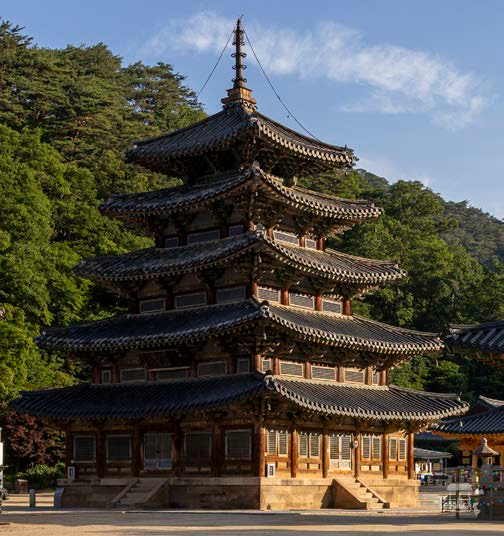
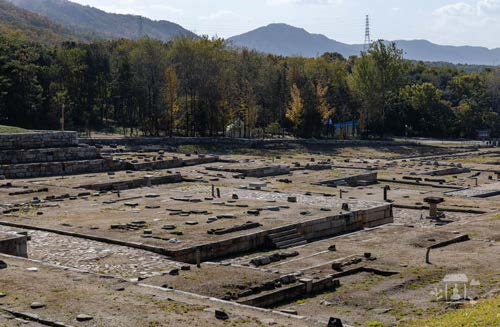
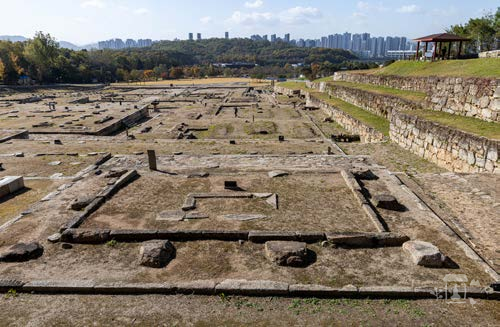
Staircases Steeped in History
Just as stone retaining walls have a history, so do temple stairs. Just by looking at the stairs connected to the stylobate, one can easily tell when they were built.
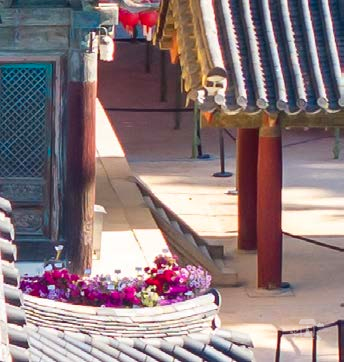
The crowning glory of Silla-era stone staircases lies in the stairs of Daeungjeon Hall at Bulguksa Temple. A defining characteristic of these staircases is the somaetdol, the stone elements that function as the banisters of a stone staircase. They tend to sit low and diagonally along the stairs on both sides, and then slightly protrude forward. These are simple and unassuming.
The stairs at Daeungjeon Hall at Bulguksa Temple reveal somaetdol shaped like a ‘’ Their outer surfaces are double-cut inward, following the contour. If the design had been simply flat, it would have been bland and monotonous. A closer look at the somaetdol's contour reveals a slight upturn at the front, creating a delicate double- edged arc, reminiscent of a beoseon (traditional Korean socks). Had this contour been carved simply as a straight line, it would have felt rigid and stiff. Skilled stonemasons, however, have used such flexible lines to create a sense of lightness. This stairway style—with its double-edged contours carved on the outer surfaces of the somaetdol—is a unique Silla style, and can also be found on the steps of Daeungjeon Hall at Buseoksa Temple in Yeongju, and the steps of Geodonsa Temple Site in Wonju.
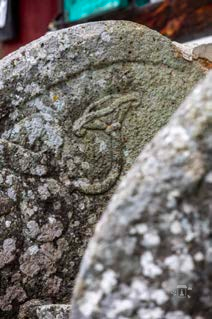

The Evolution of Somaetdol Through the Ages
By the late Silla Dynasty, somaetdol, that once descended in a straight diagonal line, began to gradually become more rounded. This characteristic can be found at the Seongjusa Temple Site in Boryeong. Seongjusa Temple was home to the Seongjusan School, one of the Nine Mountain Schools of Korean Seon in the late Silla period. The stone steps at the site reveal slightly rounded somaetdol, as well as steps with lions enshrined in front of the rounded somaetdol.
During the Goryeo Dynasty, the somaetdol along the stairs began to show more of a bulge. The upper part of the somaetdol descends in a semicircular shape, and the front part is rounded like a drum. This can be seen on the steps of the Hoeamsa Temple Site in Yangju, Daeungjeon Hall of Cheongpyeongsa Temple in Chuncheon, and Daeungjeon Hall of Chiljangsa Temple in Anseong.
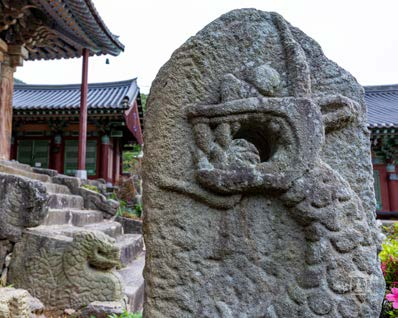
During the Joseon Dynasty, the semicircular somaetdol remained, but its foretop gradually began to include dragon designs. After the Japanese invasions of Korea, in which numerous temples were burned to the ground, the practice of installing blue and yellow dragon sculptures inside and outside temple halls to protect the temple from fire became popular. These dragons also began to appear on stone stairs. The appearance of dragons on stone stairs led to the perception that the dharma hall itself was a Wisdom Dragon Ship, a vessel that carried all sentient beings to paradise.
The exterior carvings on the somaetdol also became more diverse, featuring dragons, lotus flowers, and clouds. The stone steps of Geungnakbojeon Hall at Sinheungsa Temple in Sokcho—completed in 1761 (the 37th year of King Yeongjo's reign)—are a prime example. The steps of Daeungjeon Hall at Heungguksa Temple in Yeosu feature four dragons.
Through these stone retaining walls and staircases, we can observe the evolution of architectural styles over time. While the buildings themselves are significant, the stone retaining walls and staircases— silently standing and reflecting the past—are also a part of our deeply cherished cultural heritage.



4th Fl. Templestay Information Center 56 Ujeongguk-ro, Jongno-gu, Seoul, South Korea (03145)
Tel : 82-2-2031-2000 / Fax : 82-2-732-9928
Copyright ⓒ 2020 Templestay webzine. All Rights Reserved.
4th Fl. Templestay Information Center 56 Ujeongguk-ro, Jongno-gu, Seoul, South Korea (03145)
Tel : 82-2-2031-2000 / Fax : 82-2-732-9928
Copyright ⓒ 2020 Templestay webzine. All Rights Reserved.