


Time to picture our future

Seon Meditation Templestay, the Spontaneous Path to Happiness
H
>Time to picture our future
>Seon Meditation Templestay, the Spontaneous Path to Happiness

How to Love Yourself
"Let Go and Encounter Your True Self" Templestay at Hoeamsa Temple in Yangju
Do you know how to love yourself? Have you ever embraced yourself as you are, comforted yourself
without being critical, or supported yourself unconditionally? Everyone talks about "healing," but for
those who have never learned or practiced self-love, a Templestay program at Hoeamsa Temple in
Yangju teaches you how to truly love yourself through such activities as: walking meditation and breath
awareness, listening to the sounds of singing bowls, enjoying a warm cup of tea, etc. Breathe deeply
together with others and experience with clarity the moment you begin to love yourself again.
A Space that Attracts the Heart Even Today
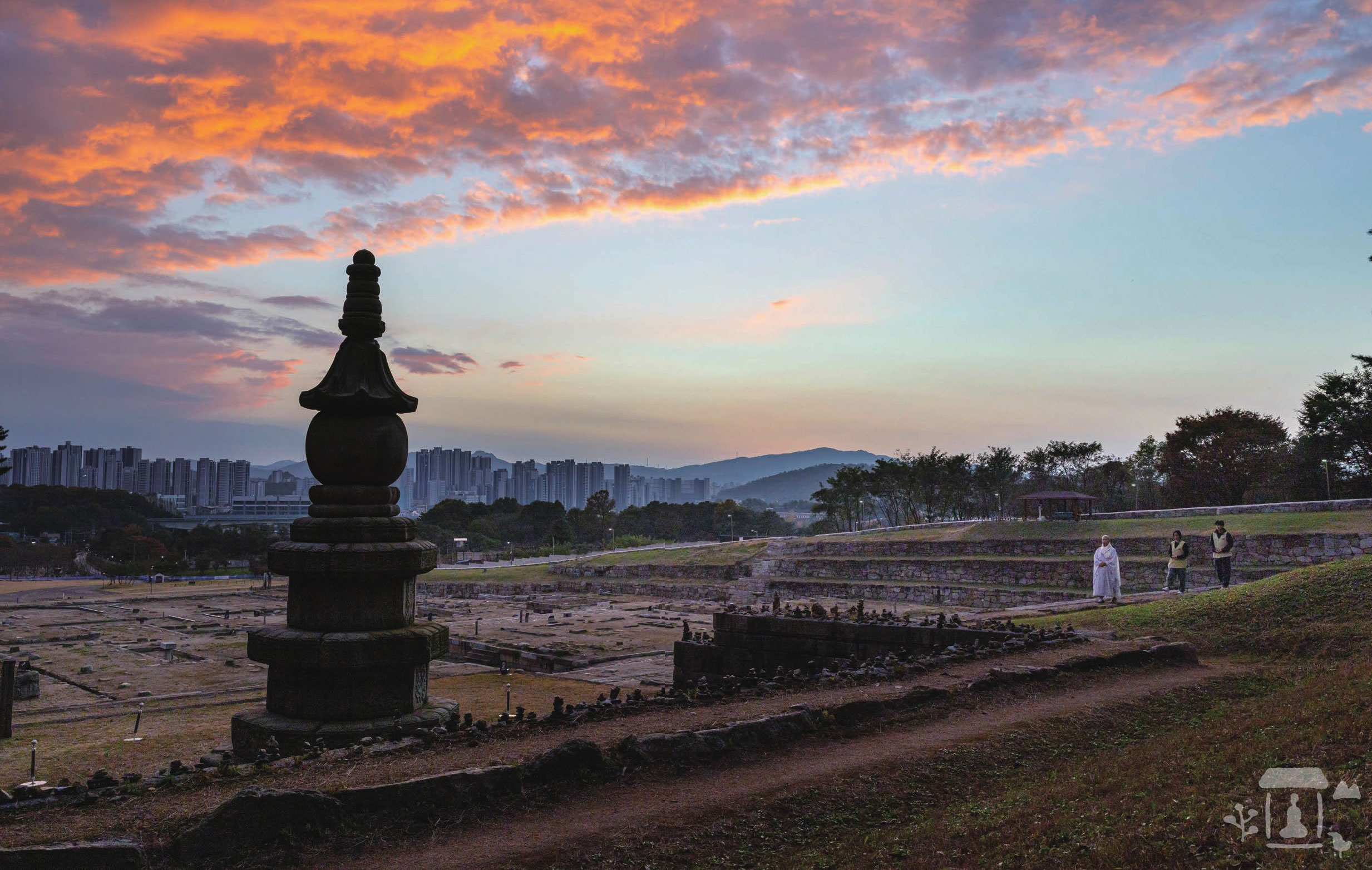
The path to Hoeamsa Temple is immense nature. Located on the mid-slope of Mt. Cheonbosan (lit. "Heavenly Treasure Mountain"), visitors are first greeted by a vast expanse of open sky and sunlight, reflecting the mountain's name. Here, accumulated layers of time linger quietly. Known as the Hoeamsa Temple Site, this expansive site is the ruins of an old temple, a testament to the rise and fall of past events. And when first gazing upon it, one feels a brief sense of loneliness, but then, eventually, tranquility returns.
Hoeamsa Temple, as recorded in the Dongguk Yeoji Seungnam (Survey of Geography of Korea), has captivated the hearts of people since the 12th century, when envoys from Jin China paid their respects here. In the late Goryeo period, Jigong and Naong Seunims cultivated the Seon tradition here, and in the Joseon Dynasty, members of the royal family visited here, including King Taejo Yi Seong-gye.
This magnificent temple—once home to over 3,000 monks and having buildings measuring 266 bays in area—has vanished with the passage of time, but the tranquility and spirit of the site remain unchanged. It's a place that silently causes people to briefly pause and put their minds at ease. Perhaps that is why so many say, "The moment you step into Hoeamsa Temple, you feel an indescribable sense of peace." In every spot bathed in sunlight, the warm essence of long-held vows seems to bloom faintly.
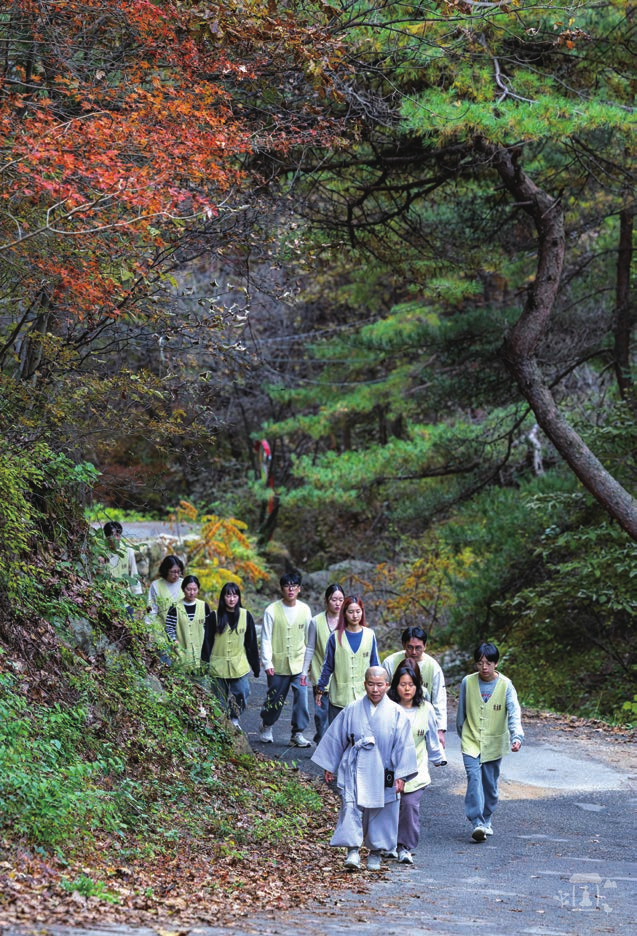
Passing the old temple site, a leisurely ten-minute walk along the forest path while taking calm, even breaths, leads up to the "present-day Hoeamsa Temple." This millennium-old temple, reestablished in 1821, houses the stupas and steles of three great Buddhist monks: Indian Seon Master Jigong; Seon Master Naong, mentor of King Gongmin of the late Goryeo Dynasty; and Great Master Muhak, mentor of King Taejo Yi Seong-gye, founder of the Joseon Dynasty.
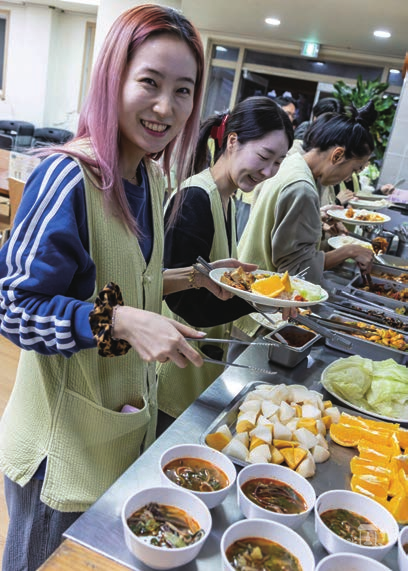

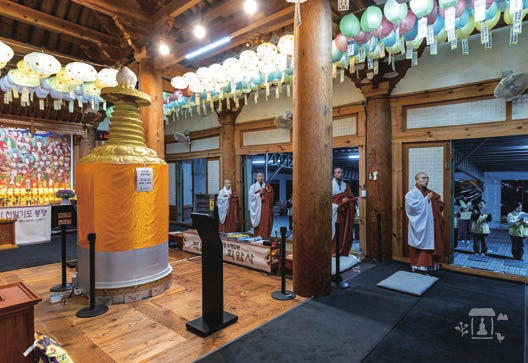
An Experience to Relax the Body and Calm the Mind
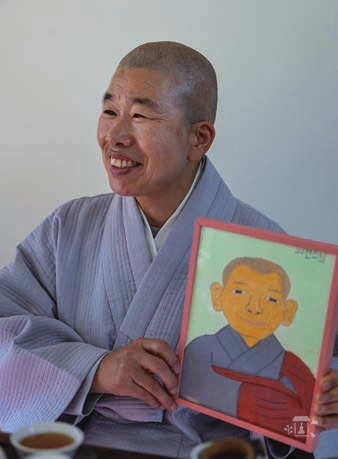
Uicheon Seunim, Hoeamsa Templestay's guiding monk, said, "When you feel peace, filled with joy and happiness, your heart begins to soften. We live in an age where people can live to be 100. How can we achieve our goal of living a healthy and happy life? We need to learn to breathe properly."
This Templestay program, titled "Let Go and Encounter Your True Self," is packed with enriching activities, including: breathing meditation, singing bowl meditation, walking meditation, tea meditation, and a conversation over tea with monks. Uicheon Seunim greeted participants with a warm smile and guided them through breathing exercises from the very first encounter. His animated expressions and friendly explanations quickly helped the participants relax and open their hearts.
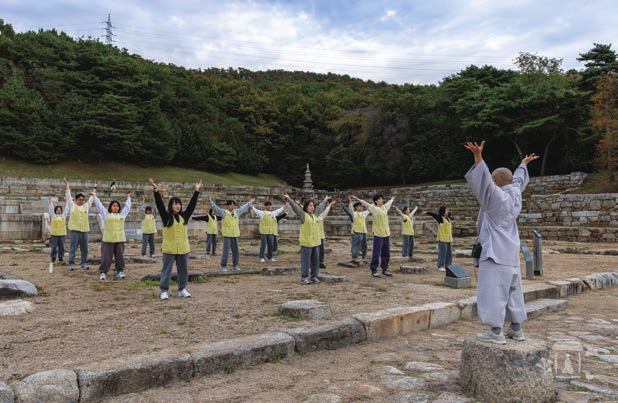
He said: "Inhale deeply the fresh air of Hoeamsa Temple, and as you exhale, spew out any worries that are weighing you down. Let go of your worries as you slowly exhale."
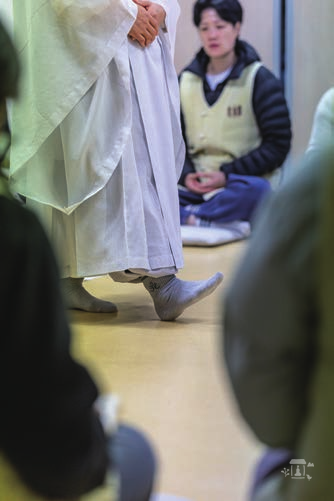
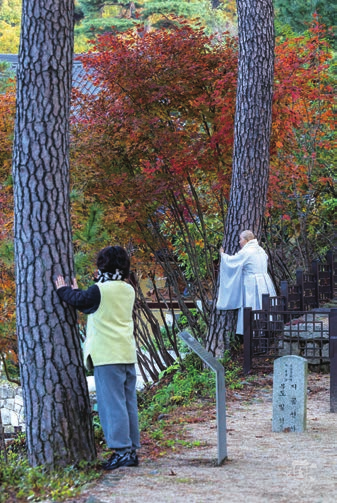
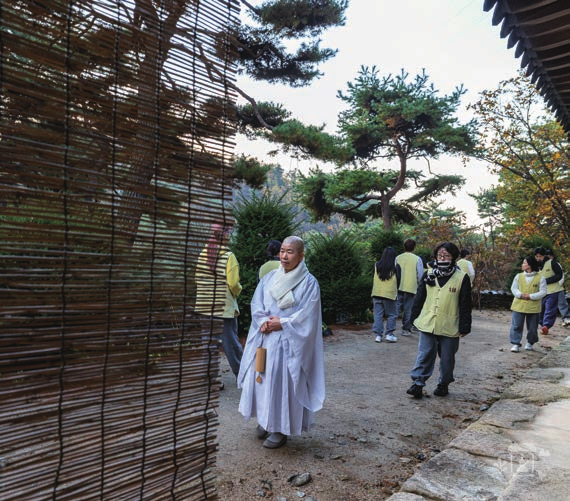
Following his instructions, our breathing naturally expanded deep into our bellies. During the two-day Templestay, no matter what kind of meditation we did, he always reminded us of our breathing at least once, because all meditation begins with proper breath control. Even as we walked around Hoeamsa's temple compound, or even as we paused to admire the scenery, he would say, "Feel how your breath is flowing in and out right now."
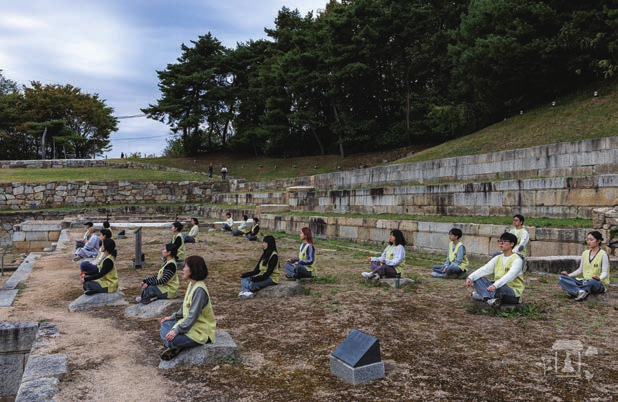
As I regulated my breathing and became mindful of my steps, awareness arose naturally, not even thinking of it as "walking meditation." I heard the birds singing, something I hadn't been aware of on the way up. The crunch of fallen leaves underfoot, and the sensation of my soles touching the ground became clearer. The ten minutes of walking flew by in an instant. We sat around on the bare foundation stones, regarding the open sky as our ceiling, and meditated for a moment. Thoughts that had weighed on my mind before my Templestay suddenly faded away.
Emphasizing relaxation, Uicheon Seunim said: "You can play the piano well only if you relax your wrists. Even when receiving any treatment, doctors tell you to relax. Relaxing is actually incredibly difficult. However, people who are good at relaxing are also more creative. Many people are constantly tense while striving to do their jobs well. Tension stiffens the body, and a tense mind can't find peace. Relaxation is achieved only when you relax."
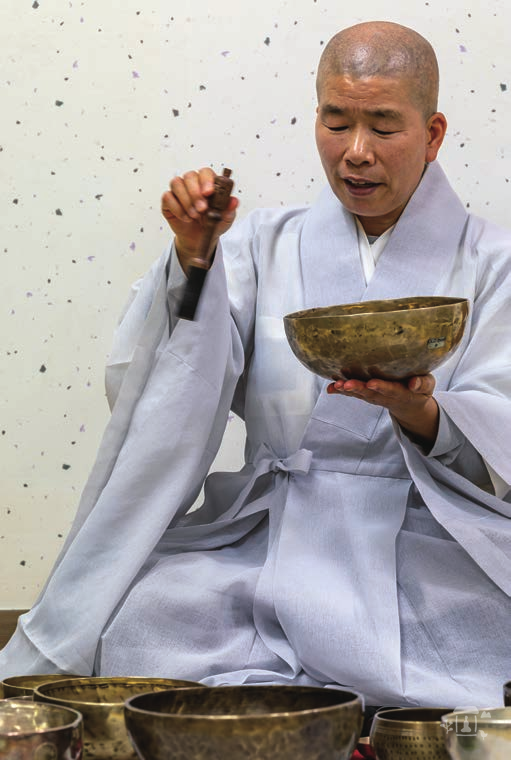
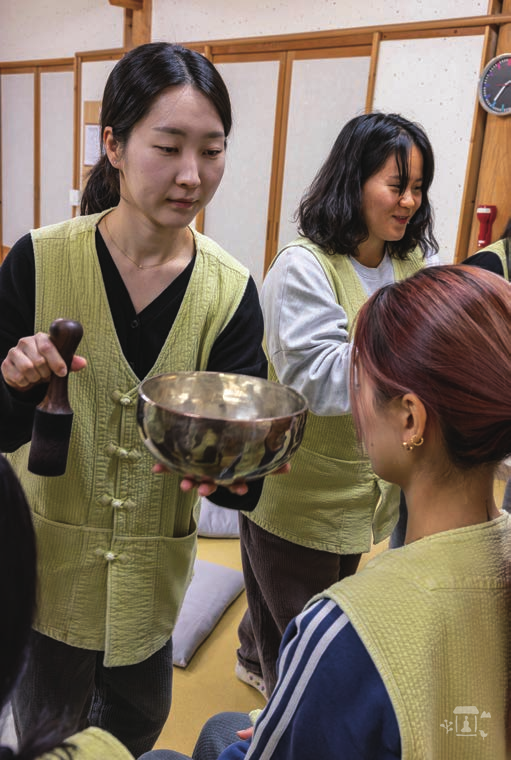
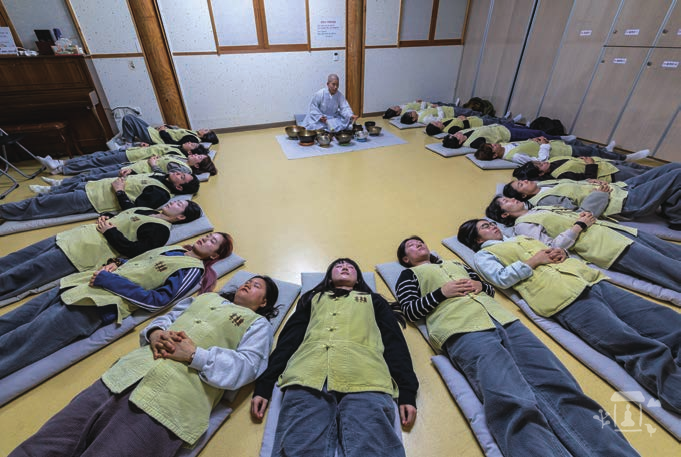
The singing bowl meditation session followed. One participant asked, "How does a singing bowl help with meditation?" Uicheon Seunim responded, "When you listen closely to the sound of the singing bowl, the sound waves travel from your head to your toes. As you surrender to the clear vibrations, your body gradually releases tension, and your mind gradually relaxes.
Relaxation is the most essential aspect of cultivating compassion. It's the prior step to true meditation." The participants lay on their backs on the floor cushions and listened intently to the sound of the singing bowl. Park Da-yeong (28, Gyeonggi-do Province) was so comforted by the sound that she fell into a deep sleep. She said: "The lights went out and I lay down, listening to the sound of the singing bowls. For a brief moment, I fell into a deep sleep. The sound seemed to spread delicately, enveloping my entire body. It was so real because Uicheon Seunim had previously explained how the sound of the singing bowls affected each part of the body."
Without anyone analyzing their thoughts or forcing themselves to be healed, one simply experiences the mind relaxing as their body relaxes. A subtle, almost imperceptible look of relaxation began to permeate the participants' faces.
When You Can Love Yourself First
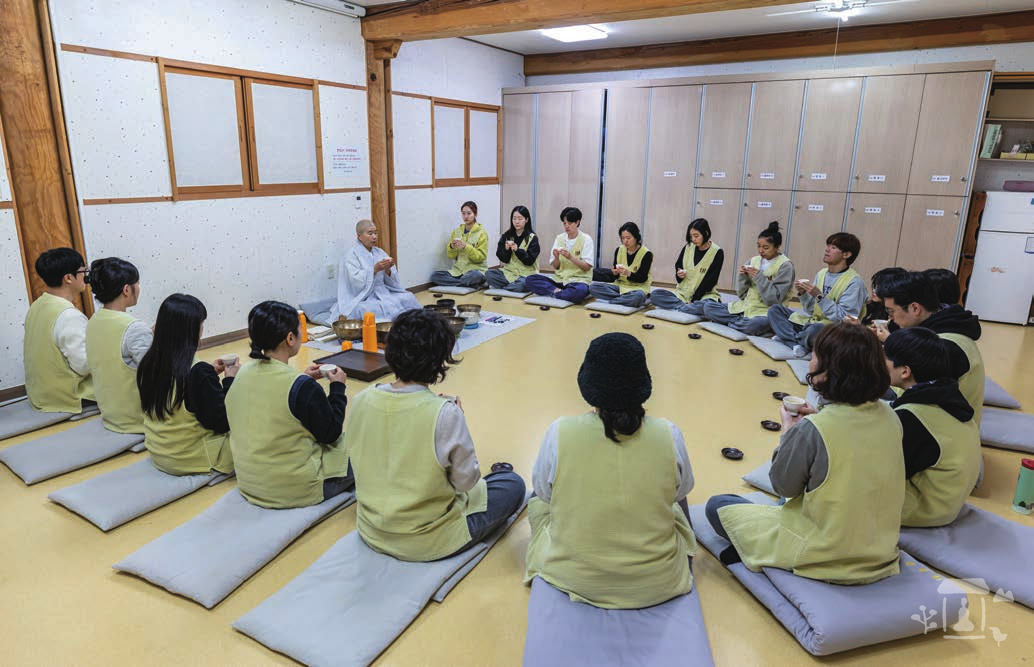
he next morning during tea meditation, Uicheon Seunim asked, "To whom would you like to serve this tea today?" adding, "I hope that person is yourself." As they each took a sip of the warm tea, they experienced serving tea "to themselves" for the first time. As they held the warm cups in their hands, they felt a distinct sense of being kind to themselves.
Uicheon Seunim meticulously guided each step throughout the entire session. And at the end of every meditation, he always added the same phrase: "Keep a smile on your face and transmit all your loving feelings to every cell of your body with every breath."
The two-day program had a clear goal: to enable participants to experience Seon meditation, and to fully understand "how to love myself," beyond simply relaxing and inner healing.
Uicheon Seunim explained: "Of the Four Immeasurable Minds, the first component is loving-kindness. If you don't love yourself first, you cannot extend love to others. Since our time here is too short to study all four of them— loving-kindness, compassion, joy, and equanimity—we will practice loving-kindness first."
He said that loving-kindness is not based on self- centered attachment, but on the power to accept ourselves as we are: Only when we have the confidence of knowing that we are good people and have the magnanimous mind to forgive ourselves will love for others begin to flow naturally.
He elaborated: "A smile is the first step. We must first send joy and happiness to ourselves. Then, we will be able to extend kindness to others. We must not feel obligated to do it, but do it because it feels good. Doing good deeds brings us joy. As that joy accumulates, our lives will change."
A single act of compassion begins with time spent within oneself and spreads outward. It is part of the process of loving oneself. It is an expansion of loving-kindness. A single smile that appears on one's face the moment one takes a deep breath ultimately radiates warmth out to the world.
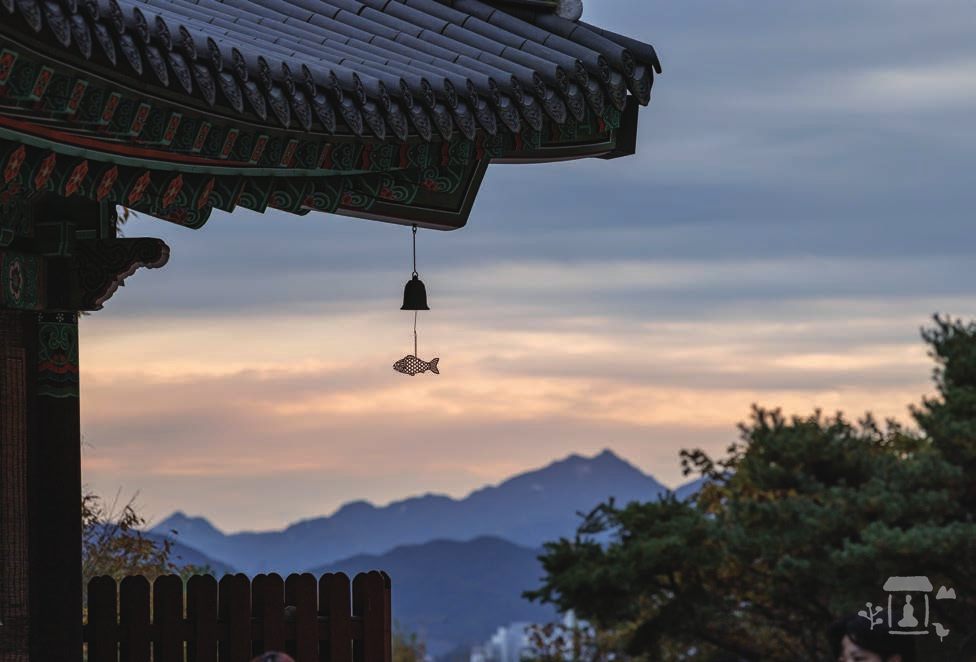
As the participants descended the mountain back to their daily lives after their two-day experience, a smile naturally crept across their faces. Self-love quietly illuminated the surroundings like sunset at the Hoeamsa Temple Site.



4th Fl. Templestay Information Center 56 Ujeongguk-ro, Jongno-gu, Seoul, South Korea (03145)
Tel : 82-2-2031-2000 / Fax : 82-2-732-9928
Copyright ⓒ 2020 Templestay webzine. All Rights Reserved.
4th Fl. Templestay Information Center 56 Ujeongguk-ro, Jongno-gu, Seoul, South Korea (03145)
Tel : 82-2-2031-2000 / Fax : 82-2-732-9928
Copyright ⓒ 2020 Templestay webzine. All Rights Reserved.