


Time to understand our traditions

Forest of Life, a Temple Forest
H
>Time to understand our traditions
>Forest of Life, a Temple Forest

The Buddha's Seat on a White Winter Mountain
Jeongamsa Temple on Mt. Hambaeksan in Jeongseon
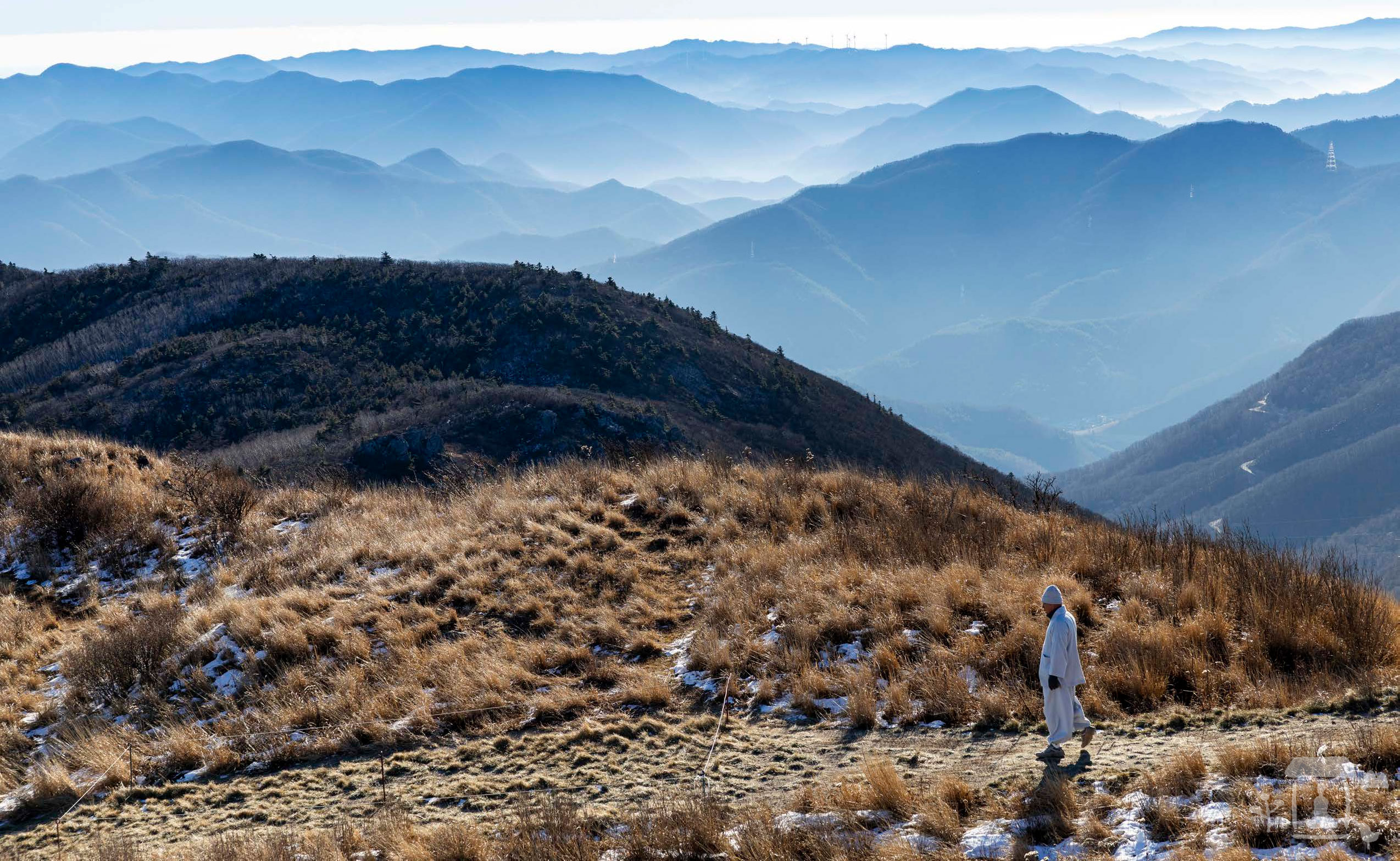
With each step toward the mountain temple, a refreshing feeling permeates the air, as if the accumulated stress of city life is being peeled away layer by layer. It's late autumn, too early to be called winter. I visit Jeongamsa Temple on Mt. Hambaeksan, at a time when the Earth's autumn colors are on full display. Nestled deeper in the mountains than any other mountain temple, the road to Jeongamsa Temple still feels special, even though it's a quicker drive on four wheels than by the more traditional two feet.
Larch trees with bright yellow autumn leaves stretch from Yeongwol- eup all the way to Gohan-eup, but they were nowhere to be seen after we passed the entrance to Jeongamsa Temple; it was as though they had never existed. The forest's silence announced that we had entered a winter mountain temple, not autumn. In the high, deep mountains, well over 800 meters above sea level, winter had arrived earlier than anywhere else.
Relationships amidst Ceaseless Change
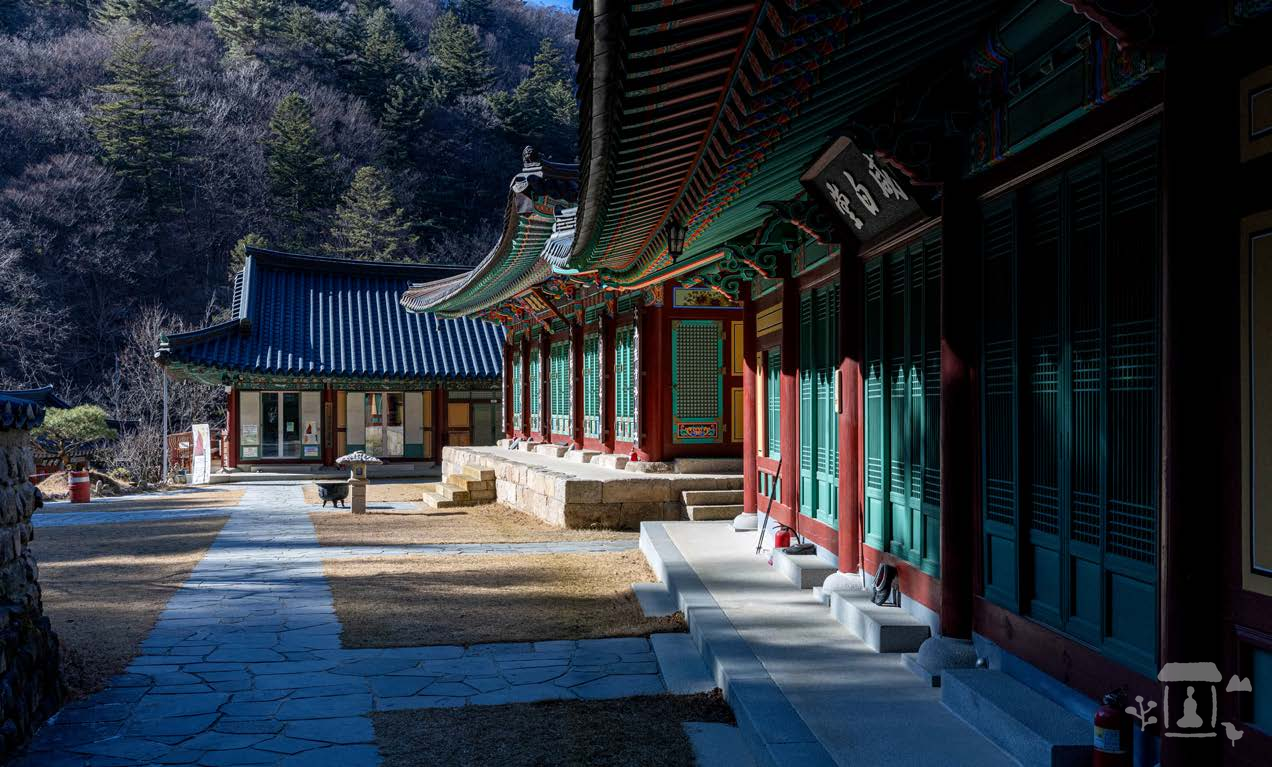
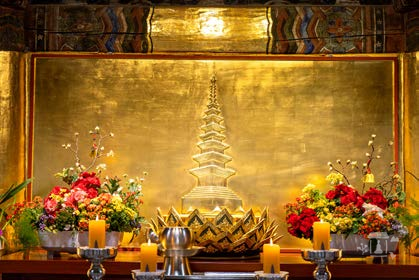
All beings arise and cease in interdependent relationships. They change ceaselessly and are interrelated. Jeongamsa Temple is nestled deep in the mountains and is a sacred site as one of five Buddha Relic Sanctuaries in Korea. It reminds us, through the vast forest that surrounds it, that even the act of hoping for "continued silence without change" reflects the existence of an inner desire.
Nestled deep in a valley on the northern slope of Mt. Hambaeksan, Jeongamsa Temple is "tidy and tranquil as it is separated from the secular world by forests and valleys that block the sun." Surrounded by steep mountain ranges to the east, west, and south, it is particularly blocked from the sun in winter. As the eternal abode of a Buddha Relic Sanctuary, where could there be a more serene Buddha realm? Ever since the Silla monk, Vinaya Master Jajang, founded Jeongamsa Temple here in 645, even in the coldest Korean winters, the warmth of the Buddha's wisdom has endured for 1,400 years.
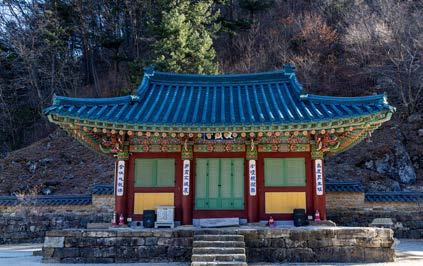
Passing through a forest of towering fir trees that seem to signal the temple's entrance, and then past the Iljumun Gate and Beomjongnu Pavilion, we arrive at Gwaneumjeon Hall. In the courtyard in front of it, I see mistletoe boasting green leaves on the branches of winter trees that have already shed their leaves. It seems as if it is trying to guide someone through the vicissitudes of time preserved in this forest. Climbing the mountain along the valley to reach Sumano-tap Pagoda, we are struck by the devotion of Vinaya Master Jajang, a monk who sought to leave the world behind, seek the tranquil forest, and cleanse his mind of inner turmoil.
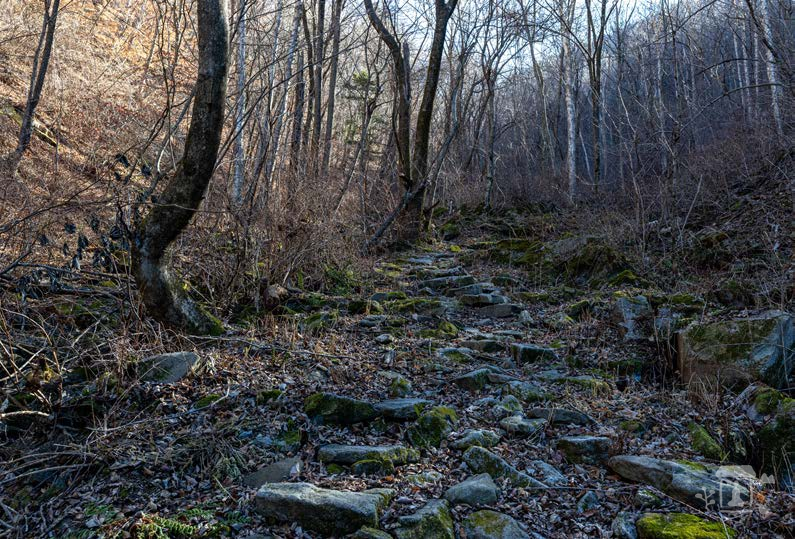
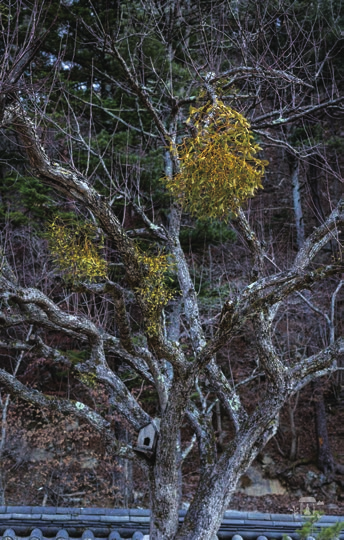
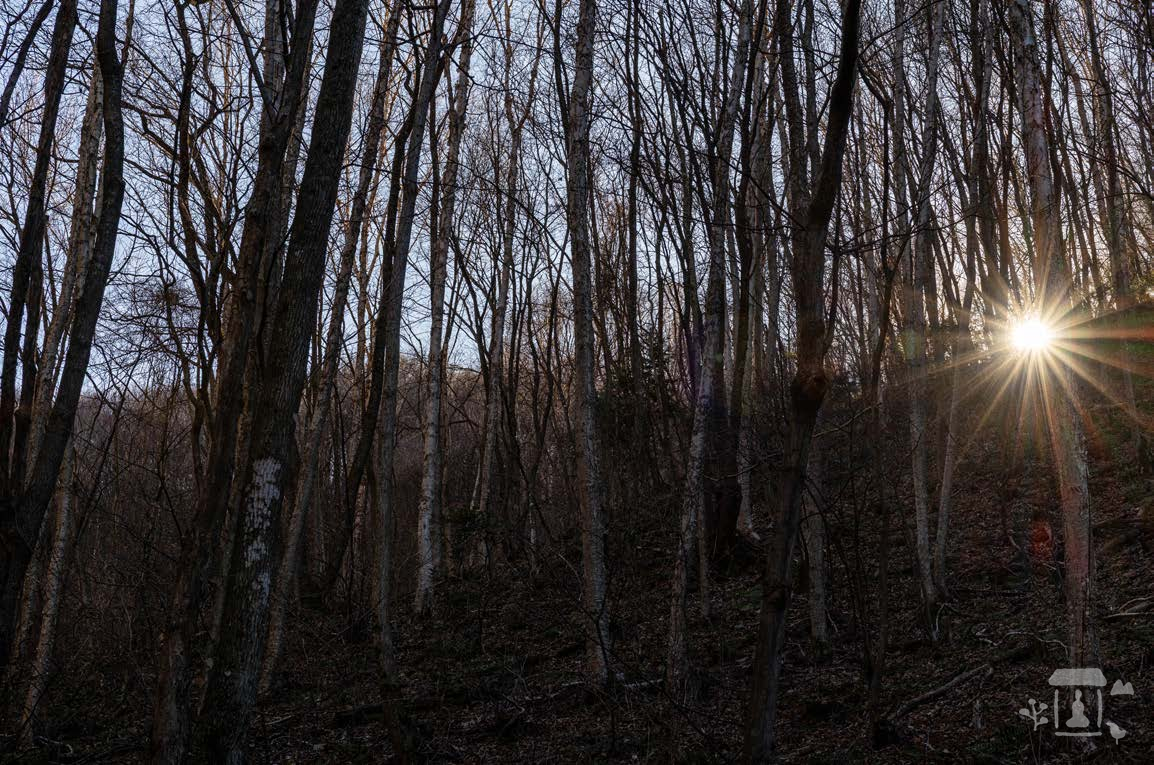
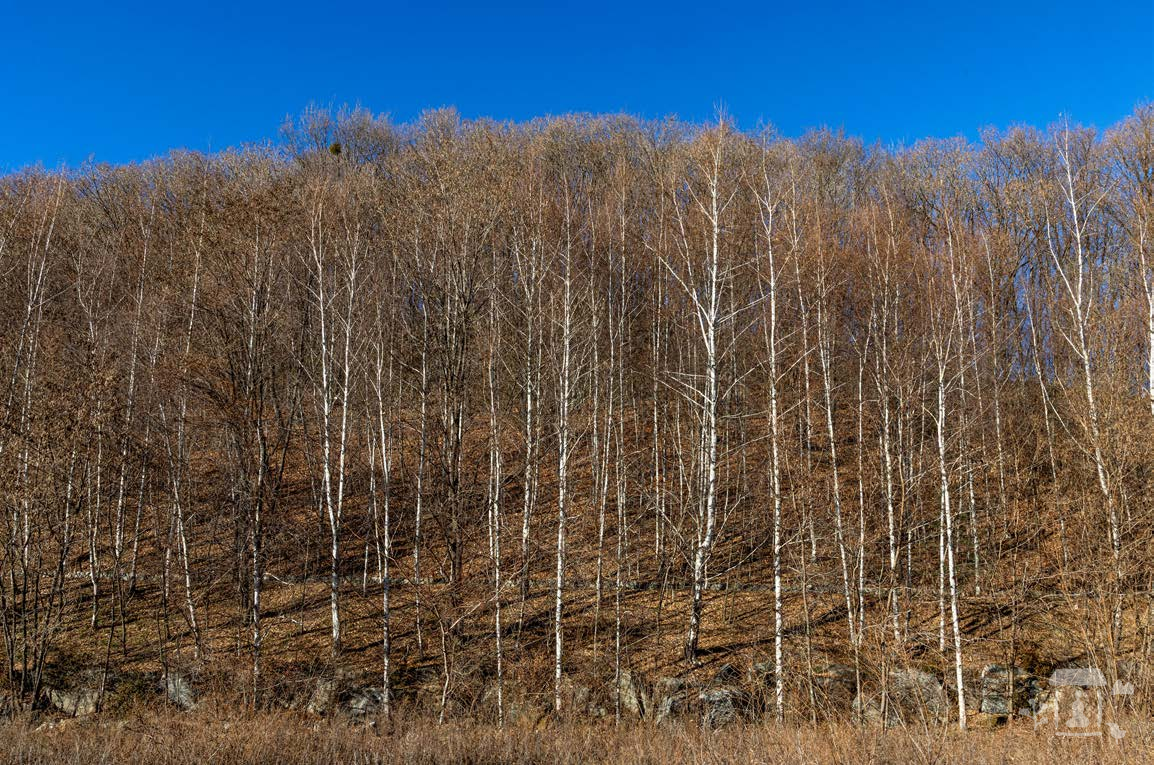

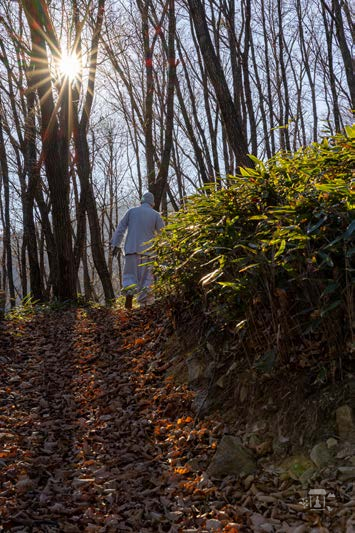
Winter is also a time to fully appreciate the inner workings of a forest, as the eyes are not distracted by the dazzling array of vibrant foliage. The winter forest of Jeongamsa Temple is no exception. While we visitors from afar may only be here momentarily, the time spent in Jeongamsa Temple, imbued with the imprint of time, is by no means insignificant.
Superficially, the forest appears motionless and still, but stepping into its depths gives one a vivid glimpse into the countless twists and turns of history unfolding within.
For centuries, Jeongamsa Temple has been nestled on a rugged mountainside, difficult to reach if one is not the type who desires to visit the Buddha realm at any cost. Thus, the forest surrounding Jeongamsa deceives visitors into thinking the forest has remained unchanged for millennia. However, this thought quickly dissipates the moment they enter the forest. Encountering the forest, scarred from being scratched and torn, they realize once again that nothing is unchanging in this world, and they let go of any hope for things to remain "unchanged."
A Time for Recovery
With Cheonung Seunim leading us, at the entrance to the forest the deep scars of trauma the forest has experienced are clearly visible. These are the scars left by mining coal, a business that enabled Koreans to stay warm for decades of harsh winters. Now that the mines have served their purpose, the surrounding area has been covered with a thick layer of earth to conceal the remaining coal deposits.
A new forest is growing above it. Currently, acacia trees are rapidly forming a new forest, and with a little time, the forest will quickly return to its original state, as it did on Mt. Hambaeksan.
Jeongamsa's forest embodies a history of modern and contemporary hardships. Located deep in the mountains, with few residences, it escaped both the exploitation of the Japanese colonial period and the devastation of the Korean War. Ironically, this vast forest, once intact, was damaged during the transition to fossil fuels, a period when the destruction of Korean forests—caused by a demand for firewood—halted and the forests began to recover.
Starting in the 1960s, when coal mining began in earnest to replace firewood, Jeongamsa's forest began to be devastated by mining. The more coal was extracted, the more the surrounding trees were felled to prop up the mine shafts. The use of fossil fuels—which was a turning point in the recovery of other forests—resulted in more damage to Jeongamsa's forest. Fortunately, coal mining has now ended, and the forest is entering a period of recovery.
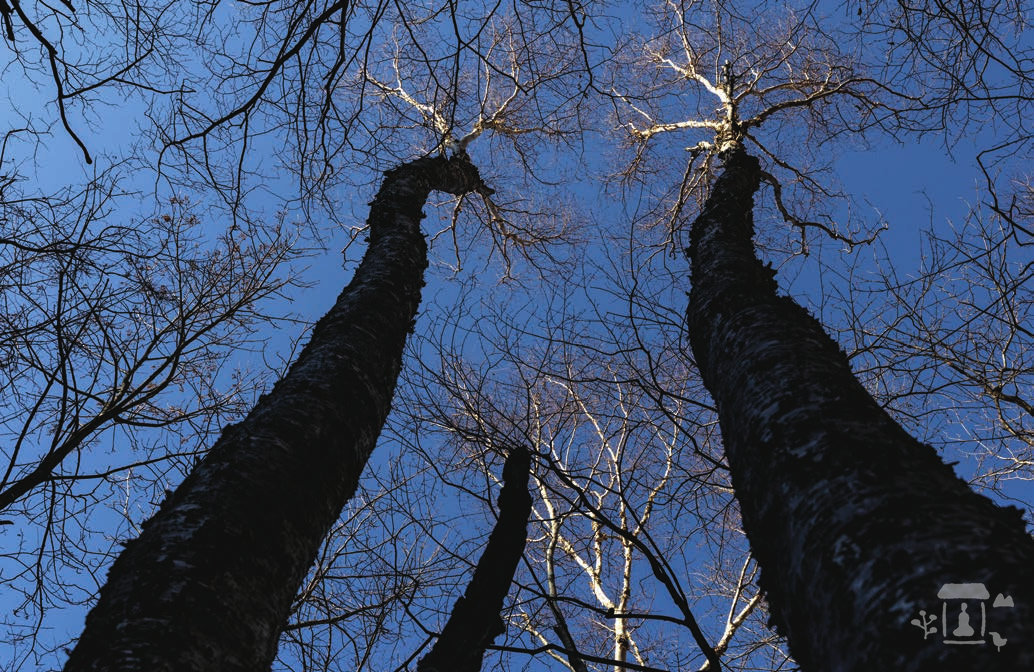
Passing through a grove of young acacia trees, the winter version of Mt. Hambaeksan gradually revealed itself. Cheonung Seunim's steps were light and brisk and his breathing steady as he ascended the oak-lined path, thickly covered with fallen leaves. Perhaps his heart, bound inextricably to the forest, was communing with it, or perhaps the youthful energy of the oak forest had permeated him. Either way, he and the forest were truly related. The path we walked together now entered a grove of oaks, where Quercus serrata and Mongolian oaks competed with each other. And between them, the birch and giant zelkova trees—the elders of the winter forest—stretched magnificently toward the sky, befitting the future masters of the forest. While we cannot see those trees now, future generations will be able to fully enjoy the restored forest of Mt. Hambaeksan, assisted in recovery by the long winters.
A Pristine Forest that Provides Refuge
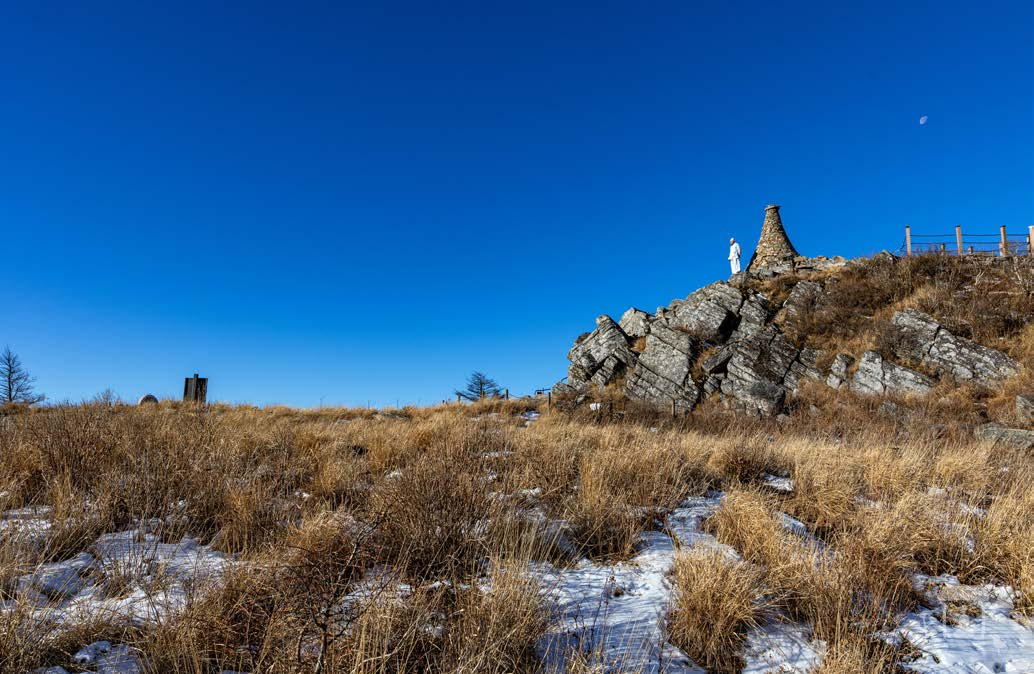
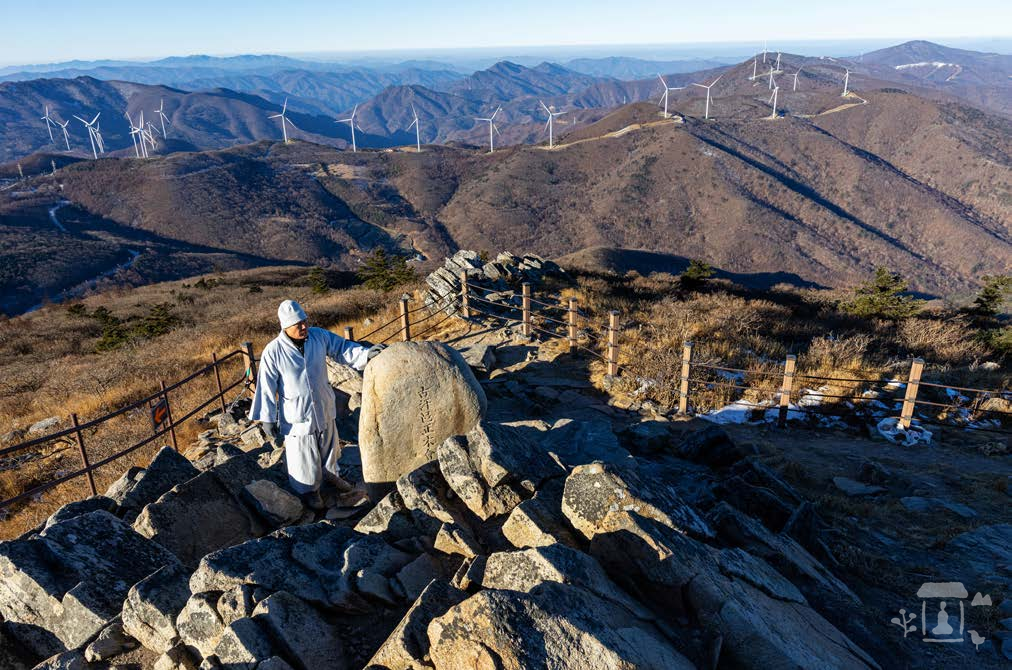
The Mt. Hambaeksan area is the highest point in Korea accessible by car. Provincial Route 414, which crosses Manhangjae Pass from Gohan, ascends up to 1,286 meters above sea level, making access in winter easier. The path along the ridge that follows Eundaebong Peak, stretching north from Mt. Hambaeksan, allows for a more immersive experience of the forest in winter, a forest preserved by Jeongamsa Temple. Following the forest path, scarred with traces of coal mining and heavy vehicles, a forest bearing the imprint of a long winter's bitter winds gradually reveals itself. The massive winter trees, enduring the harsh winds of a long winter, are a wonder in themselves. The ancient Mongolian oak trees that line the ridge seem to record everything, from the time Vinaya Master Jajang first visited this forest 1,400 years ago to the present. They stand firm, as if they will continue to record everything in the distant future, even 1,000 years from now.
Leaving the Mongolian oak forest behind, a forest of Erman's birch trees unfolds before us, seeming to blend in with the snowy mountains of midwinter. Their colors are even more striking in the early snowless months, and on a snowless winter mountain, they immediately catch your attention. With or without snow, the mountains in winter possess a unique beauty.
Extinction can also occur when something new emerges. Only when we are still can we more easily notice change. The forest of Jeongamsa Temple has been the victim of human "progress" for centuries, but is now beginning a new phase in its evolution. For centuries it has long provided us with so much, but now offers us the intangible gift of "rest" in place of things. The future of Jeongamsa's forest, encapsulated in the words of Cheonung Seunim, is reborn into the past, when Vinaya Master Jajang's wisdom eye had revealed the realm of the Buddha here in the distant past. Cheonung Seunim says, "I hope Jeongamsa Temple's forest will become whole again, a sanctuary for all who visit, both for local residents and practitioners."



4th Fl. Templestay Information Center 56 Ujeongguk-ro, Jongno-gu, Seoul, South Korea (03145)
Tel : 82-2-2031-2000 / Fax : 82-2-732-9928
Copyright ⓒ 2020 Templestay webzine. All Rights Reserved.
4th Fl. Templestay Information Center 56 Ujeongguk-ro, Jongno-gu, Seoul, South Korea (03145)
Tel : 82-2-2031-2000 / Fax : 82-2-732-9928
Copyright ⓒ 2020 Templestay webzine. All Rights Reserved.